About
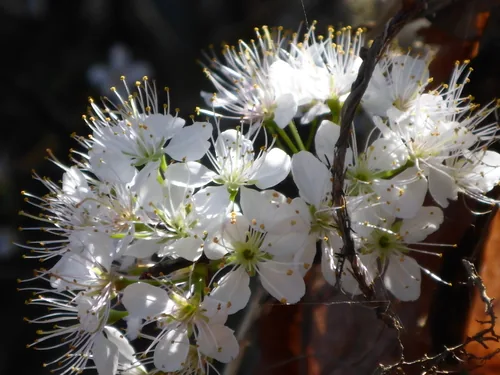
Flatwoods plum (Prunus umbellata) is a thorny, deciduous wild plum of sandy pine woodlands, scrub, and old fields in the southeastern United States, forming dense thickets that flower profusely before leaves fully expand and produce small dark plums with astringent skins. It is a wildlife cafeteria and a hedgerow backbone—less a dessert orchard tree than a resilience shrub that feeds early pollinators and late-summer birds. Humans can jam or ferment fruit with sugar and patience; straight off the tree is a tannin education. Full sun for best bloom and fruit; tolerates partial shade with fewer plums. Prefers well-drained sandy or loamy soils; tolerates drought once established compared with many Prunus. Avoid chronic wet feet—root rots follow poor drainage. Hardy in warm-temperate to subtropical climates; late freezes can nip flowers on early-blooming forms. Sow cleaned pits after cold stratification or plant fresh seed in fall outdoor beds. Root suckers can be separated in dormancy to start new thickets where thorns are welcome. Pick fruit when fully colored and slightly soft for jam; wildlife takes the rest if you delay. Prune to open centers for air flow and reduce brown rot pressure in humid years.
Permaculture Functions
- Edible: Prunus umbellata dark plums need heavy sugar jam or wine must when fully soft -- astringency is honest teacher in hog-plum batches, not grocery sweet-cherry cosplay straight off the thorny twig.
- Wildlife Attractor: Massed white five-petaled blooms hit pollen-bankrupt late-winter days for southeastern specialist bees -- while ripe fruit feeds mammals and birds if you delay harvest past wildlife calendars on scrub thickets.
- Border Plant: Multi-stem hog-plum thickets arm fencerows with thorns dense enough for goat turn zones on sandy flatwoods edges -- where blackberry rows already prove thorny-hedge ecology on the same property line.
- Pollinator: Shallow nectaries on early February clusters stay reachable for small wild bees on warm zone 8b afternoons -- before canopy closure shades the same sandhill openings later in spring.
Companion Planting
Also mentioned as companions:
- Blackberry
- Pine
Not yet profiled in PermiePortal
- Black Cherry — nearby Prunus can share pest and disease pressure; diversify spacing and sanitation in guilds
Threats & Pressure
- Apple Maggot
- Bagworm
- Blackberry Psyllid
- Cherry Fruit Fly
- Codling Moth
- Cyclamen Mite
- Fall Webworm
- Japanese Beetles
- Lesser Peachtree Borer
- Oriental Fruit Fly
- Oriental Fruit Moth
- Peach Twig Borer
- Peachtree Borer
- Pear Psylla
- Plum Curculio
- Raspberry Beetle
- Raspberry Cane Borer
- Rose Slug
- Sparganothis Fruitworm
- Spittlebugs
- Stink Bug
- Strawberry Root Weevil
- Twig Girdlers
- Vine Weevil
- Gall Mite
- Rust Mite
- Spotted Lanternfly
- Brown Marmorated Stink Bug
- Eastern Tent Caterpillar
- Harlequin Ladybird
- Tent Caterpillar