About
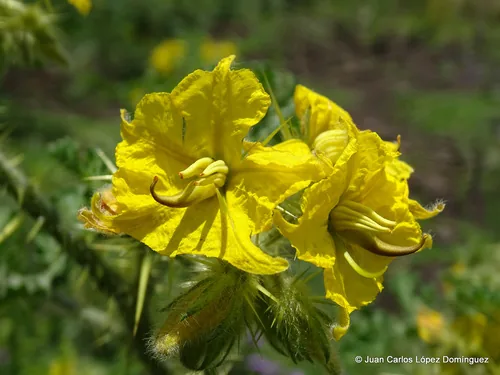
Buffalo bur (Solanum rostratum) is a spiny annual nightshade of prairies, pastures, and disturbed roadsides across much of North America, branching into a bushy plant roughly 1–3 feet (30–90 cm) with yellow flowers and formidable burred fruits. It is a historical host of Colorado potato beetle and is often treated as a weed in grazing systems because spines injure mouths and hide in wool. Some indigenous uses exist for carefully prepared plant parts—modern foragers should assume toxicity until expert training says otherwise. Full sun; thrives in dry, disturbed soils with low competition. Tolerates drought and lean sand; over-irrigated fertile beds make giant, extra-spiny monsters. Not a rain-garden plant. Usually arrives uninvited via seedbanks. If studying insects, direct-sow after last frost into warm soil; do not move plants across regions where they are regulated. Remove burred fruits before they embed in socks, dogs, and reputations. Not a crop for casual harvest—fruits and foliage contain solanaceous alkaloids. For beetle monitoring, scout foliage in mid-summer. Mow or pull before spine hardening if excluding from pasture, wearing gloves.
Permaculture Functions
- Wildlife Attractor: Solanum rostratum yellow nightshade flowers supply pollen and nectar to specialist bees in prairie remnants, -- while spiny burs snag onto coyote fur for seed drift.
- Dynamic Accumulator: One season of taprooted growth mines nitrogen and potassium into stems you can chip -- before bur hardening, then compost off-site away from hay fields.
- Mulcher: Early-summer slash of soft growth adds high-nitrogen greens to compost piles -- if you wear leather gloves and stop before spines lignify.
- Pest Management: Entomologists used this species as an alternate host to study Colorado potato beetle movement, a lab curiosity most growers still replace with rotation and scouting -- on actual potatoes.
Companion Planting
- Spines — mechanical injury to people, pets, and livestock mouths
- Solanum alkaloids — poisoning risk if consumed; do not feed in hay
- Weed status — restricted or listed in some regions; verify local rules before moving seed
Threats & Pressure