About
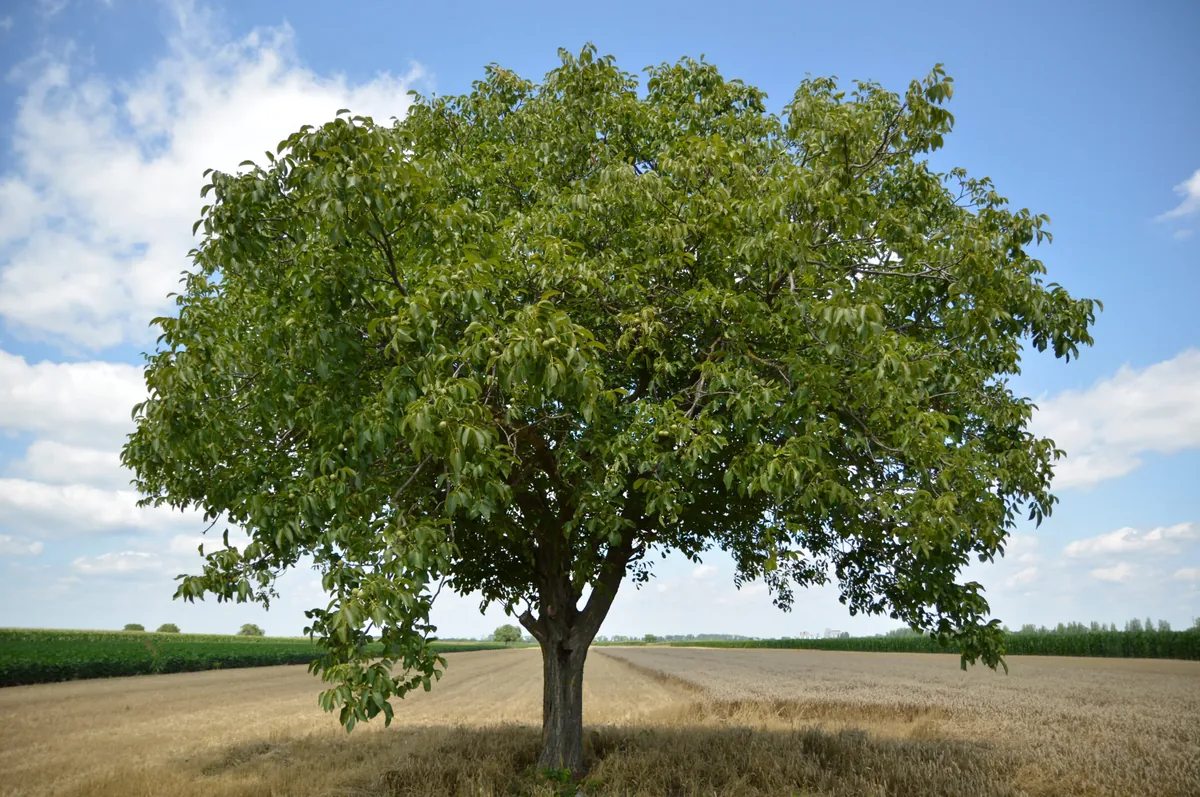
The Walnut Tree is a fast-growing deciduous tree that can reach up to 30 meters (98 feet) in height with a broad canopy spanning approximately 18 meters (59 feet). It is light-demanding and thrives in full sun. The tree produces large, compound leaves that emit a lemon or lime scent when crushed. Both male and female flowers are present on the same tree, with pollination occurring via wind. The fruit, commonly known as a walnut, is encased in a green husk that matures and splits to reveal the hard-shelled nut inside. Prefers full sun and well-drained, fertile soil with a pH between 6 and 7. While young trees benefit from regular watering, mature trees are relatively drought-tolerant. Avoid overwatering to prevent root diseases. Walnuts can be propagated from seeds or grafted cultivars. Seeds should be stratified by exposing them to cold temperatures before planting. Grafted trees often bear fruit earlier than seed-grown trees. Harvest walnuts in late autumn when the green husks begin to split. Collect fallen nuts promptly to prevent spoilage. After harvesting, remove the husks and allow the nuts to dry before storage.
Permaculture Functions
- Edible: Juglans regia walnuts sweeten after drying -- thin-shelled Carpathian types crack easier than wild black walnuts; cure before storage to avoid mold rancidity.
- Medicinal: Leaf teas show up in European herbalism for skin and lymph support -- juglone toxicity is real; do not confuse livestock dosage with human tea strength.
- Wildlife Attractor: Squirrels plant more trees than you will; mast years feed jays and rodents -- accept volunteer seedlings or mow them.
Companion Planting
Also mentioned as companions:
- Persimmon
- Mulberry
- Black Raspberry
Not yet profiled in PermiePortal
- Apple
- Tomato
- Potato
- Pine
Threats & Pressure