About
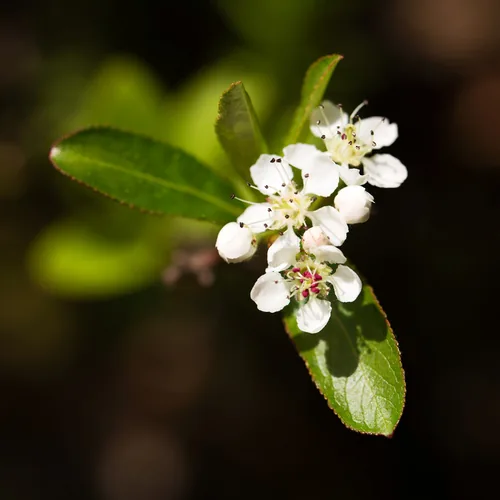
Chokeberry here highlights red chokeberry (Aronia arbutifolia), a North American native shrub of wet woods and edges, distinct from the black-fruited species more common in commercial juice plantings. It forms upright clumps 6–10 feet (1.8–3 m) with white spring racemes, glossy summer leaves turning brilliant red in autumn, and persistent red berries that read as astringent honesty. In rain gardens and hedgerows it tolerates periodic wet feet better than many fruit shrubs while feeding birds through lean weeks. Full sun to partial shade; sun improves flowering and fall color. Tolerates moist soils and short inundation better than drought; still benefits from aerated substrates rather than permanent stagnant anaerobic muck. Mulch with organic matter to buffer moisture swings. Softwood cuttings in early summer root under humidity. Sow stratified seed for diversity trials. Divide suckering clumps in early spring before budbreak for quick expansion. Berries are tart and tannic—process like other aronia fruit into juice or jelly rather than expecting dessert sweetness. Pick when fully red and glossy; leave some clusters for birds if that is part of your system design.
Permaculture Functions
- Edible: Astringent red pomes cook into antioxidant-rich juice, jelly, and fruit leather -- once sugar or blending with sweeter fruit tames the tannin wall.
- Wildlife Attractor: White spring racemes feed early pollinators -- while persistent red fruit carries calories for birds after sweeter shrubs are stripped.
- Ornamental: Glossy summer leaves flare scarlet in autumn and hold coral fruit clusters -- that read like intentional winter color blocking.
- Erosion Control: Fibrous root mats knit soggy pond shoulders, rain-garden berms, and ditch margins -- where turf would rot.
- Border Plant: Upright 6–10 ft clumps mark property lines on wet ground -- without shearing schedules demanded by formal hedge plants.
Companion Planting
- Wet, stagnant compaction — even moisture lovers need some soil oxygen long term
Threats & Pressure
- Aphids
- Apple Maggot
- Bagworm
- Blackberry Psyllid
- Cherry Fruit Fly
- Codling Moth
- Cyclamen Mite
- Fall Webworm
- Japanese Beetles
- Lesser Peachtree Borer
- Oriental Fruit Fly
- Oriental Fruit Moth
- Peach Twig Borer
- Peachtree Borer
- Pear Psylla
- Plum Curculio
- Raspberry Beetle
- Raspberry Cane Borer
- Rose Slug
- Sparganothis Fruitworm
- Spittlebugs
- Stink Bug
- Strawberry Root Weevil
- Twig Girdlers
- Vine Weevil
- Gall Mite
- Rust Mite
- Spotted Lanternfly
- Brown Marmorated Stink Bug
- Eastern Tent Caterpillar
- Harlequin Ladybird
- Tent Caterpillar