About
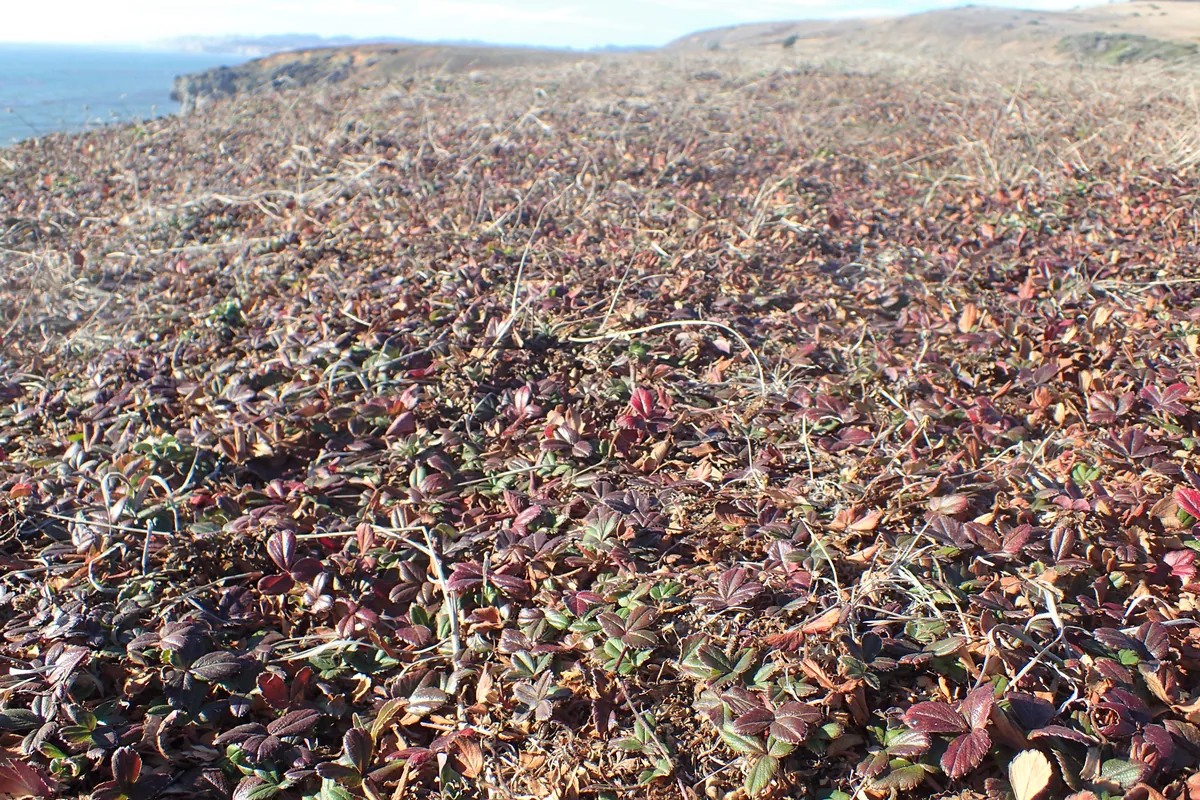
Beach strawberry (Fragaria chiloensis) is a stoloniferous perennial strawberry native to Pacific coasts of the Americas, forming evergreen to semi-evergreen mats of trifoliate leaves and white flowers followed by small, aromatic fruit. It hugs sand and gravel, typically staying low—roughly 4–8 inches—with runners that root at nodes. subtropical and tropical Americas gardeners meet it as a coastal-sand specialist or container curiosity: humid inland Florida invites foliar disease unless airflow and spacing are disciplined; Puerto Rico coastal sites can work with afternoon shade and salt-tolerant neighbors. It is not a substitute for commercial strawberry culture in the Deep South. Full sun on cool coasts; in subtropical and tropical Americas, bright partial sun reduces leaf scald. Sandy, well-drained soil; tolerates salt spray better than inland berries—avoid heavy clay saucers. Runners: peg rooted plantlets into pots or adjacent soil in spring—fastest expansion for ground cover jobs. Division of crowns in early spring or fall when temperatures are mild—reset aging mats. Pick fruit when fully colored and aromatic; yields are modest—treat as garnish and wildlife tithe, not a jam factory. Clip spent foliage after heavy fruiting if disease pressure builds; compost hot, do not coddle pathogens.
Permaculture Functions
- Edible: Fragaria chiloensis coastal selections give intensely aromatic tiny fruit for fresh bowls where humidity stays moderate -- yields stay honest garnish scale, not quart freezer sessions.
- Ground Cover: Red stolons root at nodes to tile sand and gravel paths where turf scorches -- afternoon shade inland cuts leaf scald compared with full-sun Pacific dune sites.
- Erosion Control: Fibrous roots bind coastal berms against sheet wash during tropical storms -- pair with yarrow upslope so different root depths stack holding power.
- Pollinator: White five-petaled flowers feed small native bees before bramble season peaks -- early bloom means frost pockets still matter on cold coasts.
- Ornamental: Evergreen trifoliate mats read deliberate on rockeries -- red runners in winter add color when flowers pause.
Companion Planting
Threats & Pressure
- Apple Maggot
- Bagworm
- Blackberry Psyllid
- Cherry Fruit Fly
- Codling Moth
- Cyclamen Mite
- Fall Webworm
- Lesser Peachtree Borer
- Oriental Fruit Fly
- Oriental Fruit Moth
- Peach Twig Borer
- Peachtree Borer
- Pear Psylla
- Plum Curculio
- Raspberry Beetle
- Raspberry Cane Borer
- Rose Slug
- Slugs
- Snails
- Sparganothis Fruitworm
- Spider Mites
- Spittlebugs
- Stink Bug
- Strawberry Root Weevil
- Twig Girdlers
- Vine Weevil
- Gall Mite
- Rust Mite
- Spotted Lanternfly
- Brown Marmorated Stink Bug
- Eastern Tent Caterpillar
- Harlequin Ladybird
- Tent Caterpillar