About
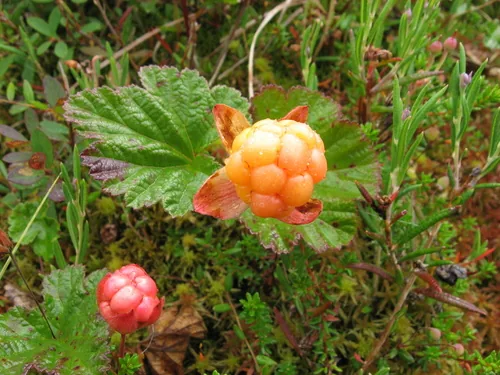
Cloudberry (Rubus chamaemorus) is a circumboreal rhizomatous bramble of sphagnum bogs, fens, and wet tundra edges, producing single white flowers on dioecious or functionally dioecious plants and amber to red aggregate fruit prized where jams and sauces tradition still exists. Leaves are crinkled and maple-like; height is low, usually under 12 inches (30 cm) excluding flower stalks. In cool, acidic, high-water-table sites it is a delicacy crop and wildlife food—not a row-crop berry for hot, dry backyards without serious habitat mimicry. Full sun in boreal climates; partial shade where heat spikes occur at the southern edge of range. Requires consistently moist, acidic organic soils resembling bog conditions; drainage must still allow oxygen between waterings in constructed beds. Warm, dry summers stress plants; afternoon shade and mulch help marginally hardy plantings. Divide rhizomes in early spring with buds attached; keep both sexes if fruit is the goal. Sow seed after cold stratification for breeding—seedlings take years to fruit. Peat-sand beds with steady moisture mimic natural rooting zones better than average garden loam. Pick berries when color fully shifts toward amber-orange and they detach willingly; flavor is tart-apricot. Process quickly into jam or freeze; fresh shelf life is short. Leave a percentage for wildlife where harvest ethics include rent payment.
Permaculture Functions
- Edible: Amber-orange drupelets taste tart-apricot and become legendary jam -- where cool, acid bogs keep Rubus chamaemorus happy.
- Wildlife Attractor: Dioecious flowers and ripe fruit slot into caribou, bear, and migratory bird diets -- across circumboreal peatlands.
- Ground Cover: Low rhizomes spread through sphagnum to form continuous mats -- in constructed bog gardens and acid rain-garden cells.
- Ornamental: Maple-like crinkled leaves and glowing fruit read as intentional texture in specialty beds -- that reject lawn aesthetics.
- Erosion Control: Rhizome networks bind saturated organic soils on pond lips -- where conventional turf would anaerobe and slump.
Companion Planting
- Both sexes needed — plant male and female clones if fruit is the objective on dioecious lines
- Warm, dry summer sites — failure is habitat mismatch, not personal worth
Threats & Pressure
- Aphids
- Apple Maggot
- Bagworm
- Blackberry Psyllid
- Cherry Fruit Fly
- Codling Moth
- Cyclamen Mite
- Fall Webworm
- Japanese Beetles
- Lesser Peachtree Borer
- Oriental Fruit Fly
- Oriental Fruit Moth
- Peach Twig Borer
- Peachtree Borer
- Pear Psylla
- Plum Curculio
- Raspberry Beetle
- Raspberry Cane Borer
- Rose Slug
- Sparganothis Fruitworm
- Spider Mites
- Spittlebugs
- Stink Bug
- Strawberry Root Weevil
- Twig Girdlers
- Vine Weevil
- Gall Mite
- Rust Mite
- Spotted Lanternfly
- Brown Marmorated Stink Bug
- Eastern Tent Caterpillar
- Harlequin Ladybird
- Tent Caterpillar