About
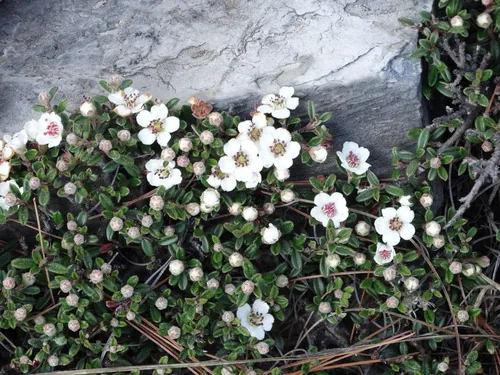
Rock cotoneaster (Cotoneaster horizontalis) is a low, wide-spreading deciduous shrub from western China, famous for herringbone branch architecture, small pink spring flowers, and bright red berries that persist into winter for birds. Plants hug walls and slopes at roughly 2–3 feet (60–90 cm) tall but much wider, rooting where stems touch ground. It excels on terraces, rock gardens, and any sunny edge that needs soil stitching without bamboo energy. Full sun for best flowering and fruit color; partial shade reduces berry display. Well-drained, average soils suit it; tolerates alkaline rubble and poor slopes once established. Drought-tolerant after rooting; avoid wet clay that promotes fire blight anxiety. Layer stems in early spring; sever rooted pieces the following year. Sow seed after stratification for diversity, not clones. Prune to guide horizontal planes along walls; remove inward twigs to improve airflow. Berries are primarily wildlife food—human use is uncommon and not the design goal here. Leave fruit for winter birds. Spring bloom timing follows local frost exit near 28°F (-2°C) in cold climates.
Permaculture Functions
- Erosion Control: Cotoneaster horizontalis layered herringbone stems root at nodes along terrace rubble and wall toes, stitching shallow soil where turf slips -- pair with sharp drainage; wet clay invites fire blight strikes on rosaceous neighbors.
- Wildlife Attractor: Pink May flowers supply small bees; glossy red pomes hang into winter for thrushes and waxwings -- leave fruit unmolested; human pie from these berries is astringent homework, not dessert.
- Ornamental: Fishbone branch planes read as living masonry draped over limestone steps and courtyard walls -- winter silhouette shows architecture even after leaves drop.
- Border Plant: Stays knee- to hip-high while spreading wide, marking bed edges without shading low sun herbs behind -- shear vertical shoots that jump the agreed plane before they fruit into neighbors' beds.
Companion Planting
- Invasive risk in some regions—check local lists before mass planting near natural areas
- Fire Blight — prune strikes in dry weather on susceptible rosaceous neighbors; improve airflow
Threats & Pressure
- Aphids
- Apple Maggot
- Bagworm
- Blackberry Psyllid
- Cherry Fruit Fly
- Codling Moth
- Cyclamen Mite
- Fall Webworm
- Lesser Peachtree Borer
- Oriental Fruit Fly
- Oriental Fruit Moth
- Peach Twig Borer
- Peachtree Borer
- Pear Psylla
- Plum Curculio
- Raspberry Beetle
- Raspberry Cane Borer
- Rose Slug
- Sparganothis Fruitworm
- Spider Mites
- Spittlebugs
- Stink Bug
- Strawberry Root Weevil
- Twig Girdlers
- Vine Weevil
- Gall Mite
- Rust Mite
- Spotted Lanternfly
- Brown Marmorated Stink Bug
- Eastern Tent Caterpillar
- Harlequin Ladybird
- Tent Caterpillar