About
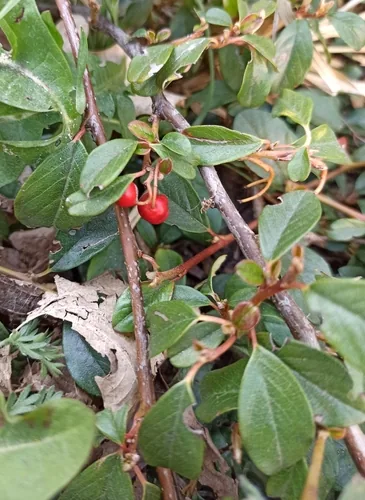
Bearberry cotoneaster (Cotoneaster dammeri) is a low, creeping evergreen shrub widely used as a ground cover on slopes, walls, and urban hellstrips where mowing is a religion you reject. Small white spring flowers yield bright red berries that persist into winter for birds; stems root where they touch soil, knitting banks. Height typically stays under 12–18 inches (30–45 cm) with spreads much wider over time. In permaculture it stabilizes sun-baked slopes and provides winter bird food—check regional invasive guidance because some cotoneasters seed aggressively where climates match. Full sun to light partial shade; dense dry shade thins coverage. Tolerates drought once established; prefers well-drained soil and sulks in constantly soggy clay. Mulch during establishment reduces weed pressure until stems mesh. Layer stems by pinning to soil in spring; sever rooted pieces the following season. Semi-hardwood cuttings in summer root with humidity cover. Divide large mats carefully in early spring before sap runs hard. Berries are bird food first; human use is limited and often bland or mealy—plan for wildlife value. Prune back edges that climb walls or swallow paths; renewal prune every few years if centers thin out.
Permaculture Functions
- Ground Cover: Cotoneaster dammeri evergreen stems root along retaining walls where mowing is fiction -- centers hollow without occasional renewal prune on rich irrigation.
- Ornamental: White May flowers, glossy leaves, and persistent red berries give three-season curb appeal on berms -- fire blight still visits rosaceous blooms in warm wet springs, so open airflow matters.
- Wildlife Attractor: Winter-persistent drupes feed robins and mockingbirds when insect protein dips -- some regions list seeding cotoneasters invasive, so check county guidance before mass planting.
- Erosion Control: Prostrate stems layer mulch uphill of paths and slow raindrop impact on compacted slopes -- stem tips reroot into gravel if you skip edging.
- Border Plant: 30-45 cm height reads as clean edge definition between lawn and shrub beds without boxwood fuss -- pair with creeping thyme in hottest driest micro-niches between stones.
Companion Planting
- Regional invasiveness — some areas restrict seeding cotoneasters; verify local guidance before mass planting
- Fire Blight — rosaceous bacterial disease can hit during warm wet springs on susceptible stock
Threats & Pressure
- Aphids
- Apple Maggot
- Bagworm
- Blackberry Psyllid
- Cherry Fruit Fly
- Codling Moth
- Cyclamen Mite
- Fall Webworm
- Lesser Peachtree Borer
- Oriental Fruit Fly
- Oriental Fruit Moth
- Peach Twig Borer
- Peachtree Borer
- Pear Psylla
- Plum Curculio
- Raspberry Beetle
- Raspberry Cane Borer
- Rose Slug
- Scale Insects
- Sparganothis Fruitworm
- Spittlebugs
- Stink Bug
- Strawberry Root Weevil
- Twig Girdlers
- Vine Weevil
- Gall Mite
- Rust Mite
- Spotted Lanternfly
- Brown Marmorated Stink Bug
- Eastern Tent Caterpillar
- Harlequin Ladybird
- Tent Caterpillar