About
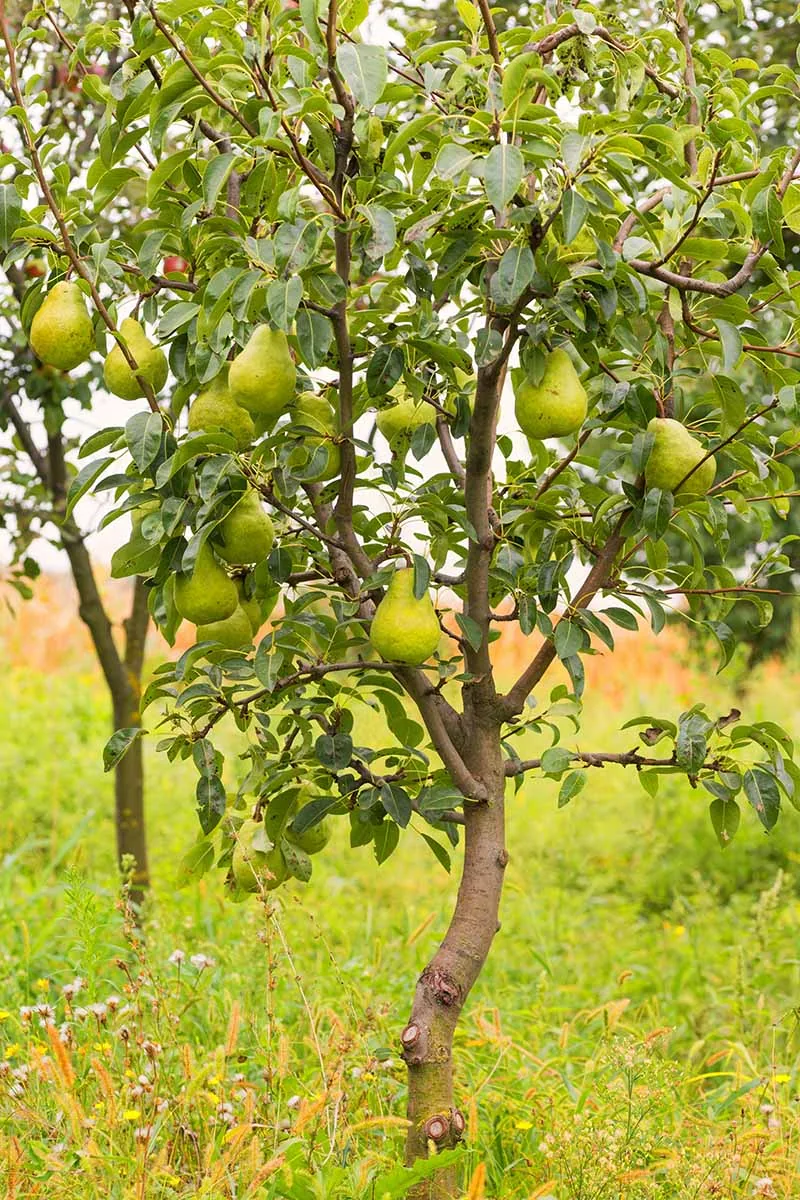
The Pear Tree (Pyrus communis) is a deciduous fruit tree known for its sweet and juicy fruits. It grows between 4.5-12 meters (15-40 feet) tall, with a rounded crown and upright branches. Blossoms appear in early spring, providing nectar for pollinators. Fruits mature in late summer to fall and are rich in fiber and vitamins. Prefers full sun for optimal fruit production. Requires well-draining, loamy soil with moderate moisture. Deep watering encourages strong root growth. Grafting: Commonly propagated through grafting onto rootstocks. Seed: Can be grown from seed, but may not produce true-to-type fruit. Cutting: Hardwood cuttings can be rooted with proper care. Harvest season varies from late summer to early fall. Pears should be picked when firm and ripened off the tree. Store in a cool place to extend shelf life.
Permaculture Functions
- Edible: Pyrus communis European types ripen off-tree from rock-hard to buttery for poaching, perry, and winter cellar storage while Asian pears stay crisp for fresh crunch -- pick when sepals cup and fruit lifts cleanly, not when wasps own the skin holes.
- Wildlife Attractor: White five-petaled spring clusters feed orchard bees; hollow older trunks shelter cavity nesters if you leave snag wood -- windfalls feed yellowjackets unless livestock or poultry patrol the skirt.
- Windbreaker: Pyramidal semi-upright cultivars on vigorous rootstocks knit into farm wind fences that cut desiccation across vegetable rows -- winter silhouette stays open enough that mid-field light loss stays honest.
- Border Plant: Espaliered pears mark fencelines and courtyard walls in tight lots while freestanding standards anchor orchard corners -- pair with comfrey outside the collar zone to feed surface feeders without volcano mulch.
- Erosion Control: Deep coarse roots anchor orchard berms and hillside terraces where pears replace failing annual covers -- grass understory is fine if mower blast never strips bark at the flare.
Companion Planting
Also mentioned as companions:
- Clover
- Apple
Not yet profiled in PermiePortal
- Walnut
- Fennel
Threats & Pressure
- Apple Maggot
- Bagworm
- Blackberry Psyllid
- Cherry Fruit Fly
- Codling Moth
- Cyclamen Mite
- Fall Webworm
- Lesser Peachtree Borer
- Oriental Fruit Fly
- Oriental Fruit Moth
- Peach Twig Borer
- Peachtree Borer
- Pear Psylla
- Plum Curculio
- Raspberry Beetle
- Raspberry Cane Borer
- Rose Slug
- Sparganothis Fruitworm
- Spittlebugs
- Stink Bug
- Strawberry Root Weevil
- Twig Girdlers
- Vine Weevil
- White peach scale
- Bark beetles
- Twig borers
- Gall Mite
- Rust Mite
- Spotted Lanternfly
- Brown Marmorated Stink Bug
- Eastern Tent Caterpillar
- Harlequin Ladybird
- Tent Caterpillar