About
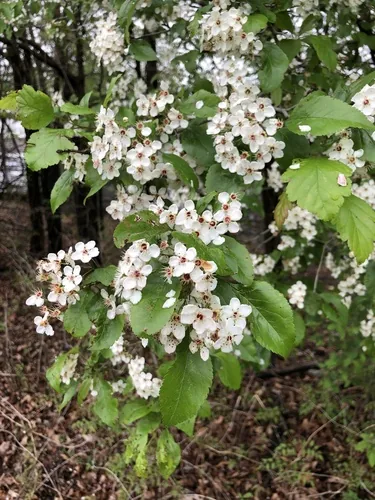
Green hawthorn (Crataegus viridis) is a deciduous rosaceous tree or large shrub of southeastern and eastern North American lowlands, river margins, and old fields, bearing glossy green leaves, white spring blossoms, and red to orange haws. Heights of 20–35 feet (6–10.5 m) are common in open conditions. It is a thorny, wildlife-friendly edge species for hedgerows and restoration mixes in humid temperate to subtropical climates. Full sun to light shade; more sun improves flowering and fruit. Tolerates moist soils and periodic inundation better than many hawthorns, yet still needs oxygenated root zones between flood pulses. Mulch young trees to reduce competition from turf. Sow seed following standard Crataegus stratification protocols. Field-collect local ecotypes for restoration fidelity. Prune for open vase shape to improve airflow in humid climates. Collect haws when fully colored for jelly experiments—flavor varies by genotype. Leave fruit for migrating birds when your pantry is full. Inspect thorny branches before reaching—blood donations are optional.
Permaculture Functions
- Edible: Crataegus viridis produces small red to orange pomes -- cook strained pulp into jelly where sugar balances tannin, and sample genotype first because haw flavor varies from mealy to bright.
- Wildlife Attractor: White May blossoms feed pollinators and the red winter haws feed migrating thrushes -- leave upper branches for birds if your larder already has jam.
- Erosion Control: Fibrous roots grip moist banks and seasonally wet lowland soils better than many upland hawthorns -- use it to armor pond edges and river margins where sheet flow cuts sand.
- Border Plant: Sharp thorns on gray stems make a livestock-respecting hedge along fencerows -- prune to an open vase in humid climates so air moves through and fire blight has fewer wet pockets.
Companion Planting
- Fire Blight — monitor for blighted tips in humid springs; prune with sanitation
- Wet feet without flow — stagnant anaerobic muck still kills roots despite “moisture loving” tags
Threats & Pressure
- Apple Maggot
- Bagworm
- Blackberry Psyllid
- Cherry Fruit Fly
- Codling Moth
- Cyclamen Mite
- Fall Webworm
- Lesser Peachtree Borer
- Oriental Fruit Fly
- Oriental Fruit Moth
- Peach Twig Borer
- Peachtree Borer
- Pear Psylla
- Plum Curculio
- Raspberry Beetle
- Raspberry Cane Borer
- Rose Slug
- Scale Insects
- Sparganothis Fruitworm
- Spittlebugs
- Stink Bug
- Strawberry Root Weevil
- Twig Girdlers
- Vine Weevil
- Gall Mite
- Rust Mite
- Spotted Lanternfly
- Brown Marmorated Stink Bug
- Eastern Tent Caterpillar
- Harlequin Ladybird
- Tent Caterpillar