About
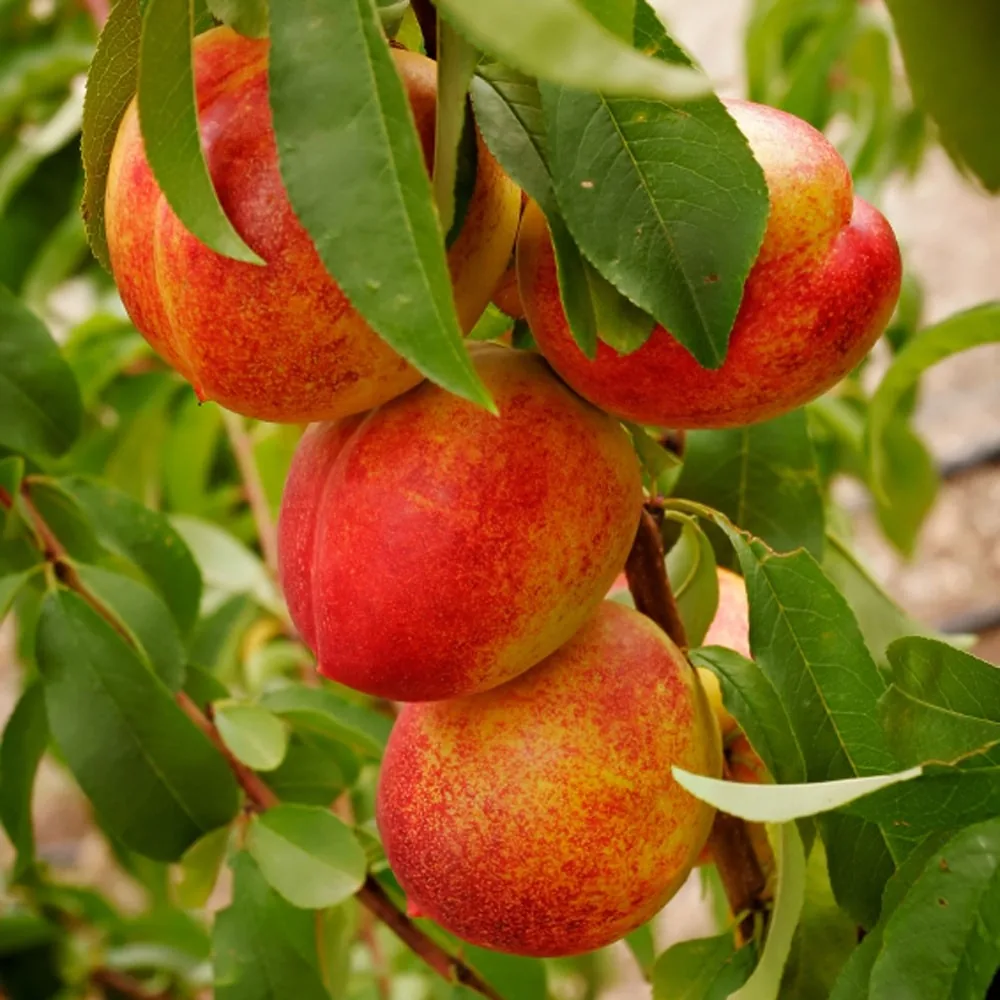
The Nectarine Tree (Prunus persica var. nucipersica) is a deciduous fruit tree producing smooth-skinned, juicy fruits similar to peaches. Typically reaching heights of 4–6 meters (13–20 feet), nectarines are prized for their sweet flavor and are consumed fresh, dried, or used in cooking and baking. Requires full sun exposure to ensure healthy growth and fruit development. Prefers well-drained, loamy soils with a slightly acidic to neutral pH (6.0–7.0). Needs regular watering, especially during dry periods, to maintain soil moisture without waterlogging. Grafting: Common method to propagate specific cultivars, ensuring fruit quality and disease resistance. Seeds: Can be grown from seeds, but the resulting trees may not produce true-to-type fruit and can take longer to bear. Fruits typically ripen in late spring to summer, depending on the variety and climate. Harvest when the fruit develops full color and yields slightly to gentle pressure. Handle with care to avoid bruising, and consume or process shortly after harvesting for best flavor and quality.
Permaculture Functions
- Edible: Smooth-skinned Prunus persica var. nucipersica fruit ripens with full background color and slight yield for out-of-hand eating, canning, and drying -- handle gently after harvest because bruised cheeks invite brown rot in humid finishing weather.
- Pollinator: Pink spring blossoms open before many summer crops, offering pollen and nectar to honeybees, mason bees, and hoverflies during orchard bloom -- avoid dormant-oil mis-timing that smothers tight bud clusters.
- Wildlife Attractor: Split fruit and ground drops feed raccoons, opossums, and fruit-eating birds along orchard skirts -- harvest rounds or accept wildlife tax where sanitation versus habitat is a design choice.
- Border Plant: Dwarfing rootstocks train into backyard fence lines, front-yard accent trees, and formal allées when spaced for air movement -- thornless smooth skin still needs pruned scaffold spacing so paths stay passable.
Companion Planting
Also mentioned as companions:
- Clover
Not yet profiled in PermiePortal
- Walnut
- Tomato
Threats & Pressure
- Apple Maggot
- Bagworm
- Blackberry Psyllid
- Borers
- Cherry Fruit Fly
- Codling Moth
- Cyclamen Mite
- Fall Webworm
- Lesser Peachtree Borer
- Oriental Fruit Fly
- Oriental Fruit Moth
- Peach Twig Borer
- Peachtree Borer
- Pear Psylla
- Plum Curculio
- Raspberry Beetle
- Raspberry Cane Borer
- Rose Slug
- Sparganothis Fruitworm
- Spittlebugs
- Stink Bug
- Strawberry Root Weevil
- Twig Girdlers
- Vine Weevil
- Gall Mite
- Rust Mite
- Spotted Lanternfly
- Brown Marmorated Stink Bug
- Eastern Tent Caterpillar
- Harlequin Ladybird
- Tent Caterpillar