About
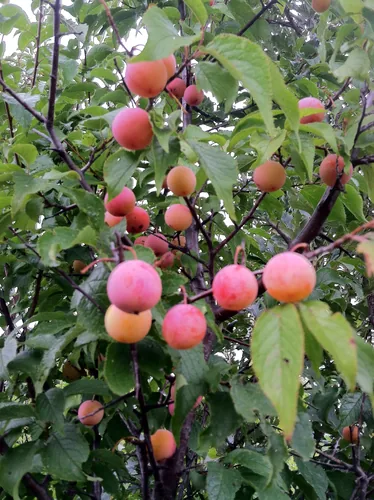
American plum (Prunus americana) is a thicket-forming native fruit tree of North American prairies, edges, and disturbed ground, producing masses of fragrant white spring flowers followed by red to yellow plums with tart golden flesh. Height varies with genetics and site—often 15–25 feet (4.5–7.5 m)—but the real habit is colonial suckers that build wildlife hedges faster than fence installers quote jobs. It belongs in food forests as an early-succession fruiting screen and soil-stabilizing edge plant where you accept some chaos. Full sun yields the heaviest fruit; light shade still flowers but crops thin. Tolerates poor soils if drainage exists; benefits from mulch and occasional deep watering during fruit swell in dry years. Avoid chronic wet feet that stress roots and invite rots on compromised bark. Sow cleaned pits after cold stratification or plant pits in fall beds for natural cycles. Dig suckers with roots in early spring before budbreak for instant thickets. Chip budding or grafting onto seedling roots captures elite fruit clones without replanting the whole row. Pick when color deepens and flesh yields slightly to pressure—flavor swings from tart to jam-sweet quickly. Process into jam, shrub syrups, or wine; fresh eating quality is seed-forward. Thin old canes periodically to renew fruiting wood inside the thicket.
Permaculture Functions
- Edible: Prunus americana red-yellow plums run tart for fresh eating unless fully tree-ripe, so most kitchens pivot to jam, wine, and shrub syrups -- pits stay bitter, so spit like an adult or cook them out.
- Wildlife Attractor: Masses of white spring flowers feed bees on still mornings while summer fruit feeds foxes, birds, and insects in waves -- thorns protect nests until fruit softens and traffic spikes.
- Border Plant: Colonial suckers build living fences along pastures faster than fence contractors quote -- mow the garden side if runners swallow paths you still need for wheelbarrows.
- Erosion Control: Fibrous roots and thicket density knit old-field banks and pond toes where sheet flow would otherwise carve gullies -- pair with elderberry on wetter feet for stacked edge functions.
- Pollinator: Bloom hits early when bee flights resume after winter debt but before canopy shade closes the sky -- heavy nectar smell pulls flies and beetles as well as honeybees, so expect diverse insect noise.
Companion Planting
- Apple — fire blight and other rosaceous issues can bridge during warm wet bloom if canopies intermingle
Threats & Pressure
- Aphids
- Apple Maggot
- Bagworm
- Blackberry Psyllid
- Cherry Fruit Fly
- Codling Moth
- Cyclamen Mite
- Fall Webworm
- Japanese Beetles
- Lesser Peachtree Borer
- Oriental Fruit Fly
- Oriental Fruit Moth
- Peach Twig Borer
- Peachtree Borer
- Pear Psylla
- Plum Curculio
- Raspberry Beetle
- Raspberry Cane Borer
- Rose Slug
- Scale Insects
- Sparganothis Fruitworm
- Spittlebugs
- Stink Bug
- Strawberry Root Weevil
- Twig Girdlers
- Vine Weevil
- Gall Mite
- Rust Mite
- Spotted Lanternfly
- Brown Marmorated Stink Bug
- Eastern Tent Caterpillar
- Harlequin Ladybird
- Tent Caterpillar