About
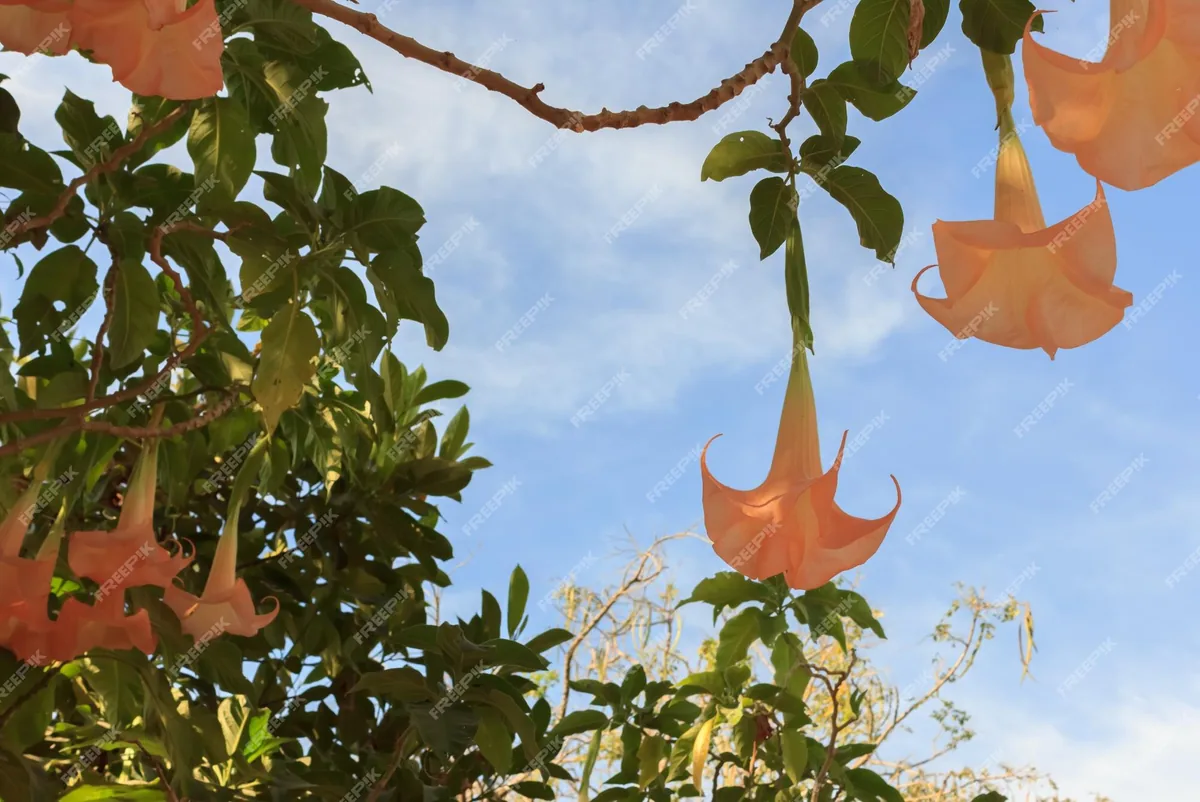
Devil's Trumpet (*Datura metel*) is a shrubby, sprawling, short-lived, tender perennial often grown as an annual. It typically grows 3-4 feet (90-120 cm) tall and spreads up to 4 feet (120 cm) wide. The plant features ovate, wavy-toothed, dark green leaves up to 8 inches (20 cm) long that emit a disagreeable odor when bruised or crushed. Its single or double, upward-facing trumpet-shaped flowers, up to 7 inches (17 cm) long and 4 inches (10 cm) wide at the mouth, have a sweetly overpowering fragrance. Blooming from midsummer to frost, the flowers open in the evening and last until noon the following day. They give way to knobby, rounded capsules that split open when ripe to release their numerous seeds. All parts of the plant are highly toxic if ingested. Prefers full sun but can tolerate partial shade. Requires regular watering to maintain soil moisture, especially during dry periods. Well-drained soil is essential to prevent root rot. Propagated by seeds or stem cuttings. Seeds should be sown indoors before the last frost and transplanted outdoors after the danger of frost has passed. Stem cuttings can be taken in late spring or early summer and rooted in moist soil. As an ornamental plant, it is not typically harvested. However, seed pods can be collected when they turn brown and begin to split open.
Permaculture Functions
- Ornamental: Datura metel bears enormous upright trumpets, single or double, that open evenings with heavy fragrance -- treat all parts as toxic landscape theater, not salad.
- Medicinal: Tropane alkaloids underlie historical analgesic and antispasmodic trials -- clinical use belongs only under trained supervision; home experimentation is reckless.
- Pest Management: Dense night fragrance and toxic foliage can reduce browsing on nearby beds -- does not replace row covers for your actual food crops.
Threats & Pressure
- Andean Potato Weevil
- Aphids
- Broad Mite
- Colorado Potato Beetle
- Corn Earworm
- Cyclamen Mite
- Flea Beetles
- Greenhouse Whitefly
- Pepper Weevil
- Reniform Nematode
- Root Aphid
- Shore Fly
- Spider Mites
- Stink Bug
- Tobacco Budworm
- Tomato Hornworms
- Whiteflies
- Wireworm
- Spotted Cucumber Beetle
- Brown Marmorated Stink Bug