About
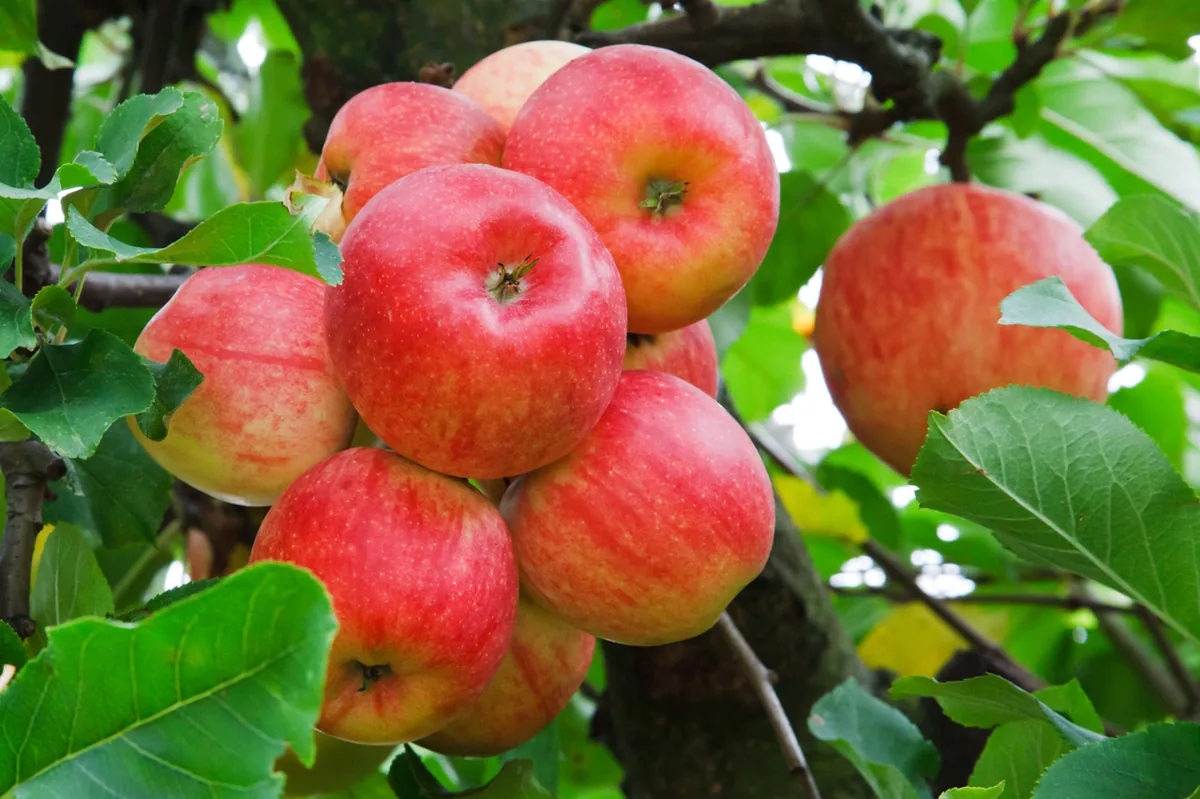
The Red Apple Tree is a deciduous tree known for its sweet, crisp red fruits. It typically grows to a height of 4.5–6 meters (15–20 feet) with a similar spread, forming a rounded canopy. In spring, it produces fragrant white to pink blossoms, which are pollinated by bees and other insects. The tree thrives in well-drained loamy soils with a pH between 6.0 and 7.0. Red Apple Trees require full sun, receiving at least 6–8 hours of direct sunlight daily. They prefer consistent moisture but are sensitive to waterlogged conditions. Regular watering is essential, especially during dry periods, to maintain soil moisture without oversaturation. Propagation is commonly achieved through grafting to ensure the desired fruit characteristics. This involves joining a scion from a preferred variety onto a compatible rootstock. Seed propagation is possible but often results in unpredictable fruit quality and tree characteristics. Harvesting typically occurs in late summer to early fall, depending on the specific variety and local climate. Apples are ready to pick when they have developed full coloration and detach easily from the branch with a gentle twist.
Permaculture Functions
- Edible: Malus domestica red-blush cultivars store months in CA storage rooms or weeks in homestead fridges for out-of-hand eating, pie, and slow cider ferments -- starch-iodine tests tell picking maturity better than color alone for each strain.
- Medicinal: Pectin-rich peels and pulp enter folk diarrhea protocols and modern soluble-fiber advice -- eating whole fruit beats megadose powder; sorbitol in juice still triggers GI drama for FODMAP-sensitive people.
- Wildlife Attractor: Codling moth larvae feed woodpeckers if you skip perfect IPM; windfalls feed yellowjackets unless poultry patrol -- accept some bird-pecked fruit if habitat calories beat cosmetic retail standards.
- Pollinator: Five-petaled pink-white apple blossoms offer pollen and nectar to orchard mason bees overlapping pear bloom -- rent hives only if native populations fail; spray windows still matter for fruit set math.
- Windbreaker: Semi-dwarf spindle rows on wire trellis cut wind across strawberry plastic and tunnel crops -- winter pruned walls leak less light than solid evergreen hedges while still trimming desiccation.
- Border Plant: Knip-boom and espalier forms mark driveway entries and legal lot lines with seasonal blossom drama -- rootstock choice decides whether neighbors fight over shade ten years later.
Companion Planting
- Walnut
Threats & Pressure
- Aphids
- Apple Maggot
- Bagworm
- Blackberry Psyllid
- Cherry Fruit Fly
- Codling Moth
- Cyclamen Mite
- Fall Webworm
- Lesser Peachtree Borer
- Oriental Fruit Fly
- Oriental Fruit Moth
- Peach Twig Borer
- Peachtree Borer
- Pear Psylla
- Plum Curculio
- Raspberry Beetle
- Raspberry Cane Borer
- Rose Slug
- Sparganothis Fruitworm
- Spittlebugs
- Stink Bug
- Strawberry Root Weevil
- Twig Girdlers
- Vine Weevil
- Gall Mite
- Rust Mite
- Spotted Lanternfly
- Brown Marmorated Stink Bug
- Eastern Tent Caterpillar
- Harlequin Ladybird
- Tent Caterpillar