About
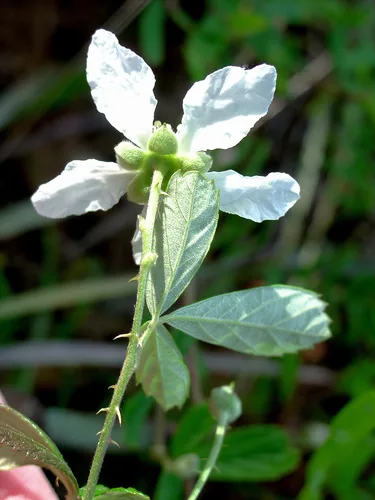
Sand blackberry (Rubus cuneifolius) is a thorny deciduous bramble native to sandy pinelands and scrub in the southeastern United States. Narrow leaves and fierce prickles defend small dark berries that reward birds and patient humans. It is a native barrier plant for sunny edges where blackberries are wanted but wetland species would sulk. Full sun for best flowering and fruit; shade reduces yield. Drought tolerant once established in deep sand; irrigate young plants through first dry season. Sandy, well-drained acidic soils; tolerates poor fertility typical of scrub. Root cuttings in winter; tip layering in early summer. Seeds need scarification and stratification—slow compared to vegetative methods. Remove old canes after fruiting to renew growth like other brambles. Pick berries when glossy black and release with a gentle tug; flavor is tart. Wear gauntlets—thorns are not negotiable. Leave some fruit for wildlife and seeding if managing a thicket for habitat.
Permaculture Functions
- Edible: Rubus cuneifolius yields small glossy black drupes with tart punch -- for jam after you beat the birds to ripe clusters on narrow-leaf scrub canes.
- Wildlife Attractor: White rosaceous blossoms feed native bees ahead of summer fruit -- that feeds scrub jays and mammals moving through pine sandhills.
- Border Plant: Dense ankle- to chest-high thickets armed with fierce prickles slow livestock and casual foot traffic -- along scrub roadsides.
- Erosion Control: Rhizomatous roots grab deep sand on banks and disturbed cuts -- where lighter soils would slide after hard rain.
Companion Planting
Threats & Pressure
- Aphids
- Apple Maggot
- Bagworm
- Blackberry Psyllid
- Cherry Fruit Fly
- Codling Moth
- Cyclamen Mite
- Fall Webworm
- Japanese Beetles
- Lesser Peachtree Borer
- Oriental Fruit Fly
- Oriental Fruit Moth
- Peach Twig Borer
- Peachtree Borer
- Pear Psylla
- Plum Curculio
- Raspberry Beetle
- Raspberry Cane Borer
- Rose Slug
- Sparganothis Fruitworm
- Spider Mites
- Spittlebugs
- Stink Bug
- Strawberry Root Weevil
- Twig Girdlers
- Vine Weevil
- Gall Mite
- Rust Mite
- Spotted Lanternfly
- Brown Marmorated Stink Bug
- Eastern Tent Caterpillar
- Harlequin Ladybird
- Tent Caterpillar