About
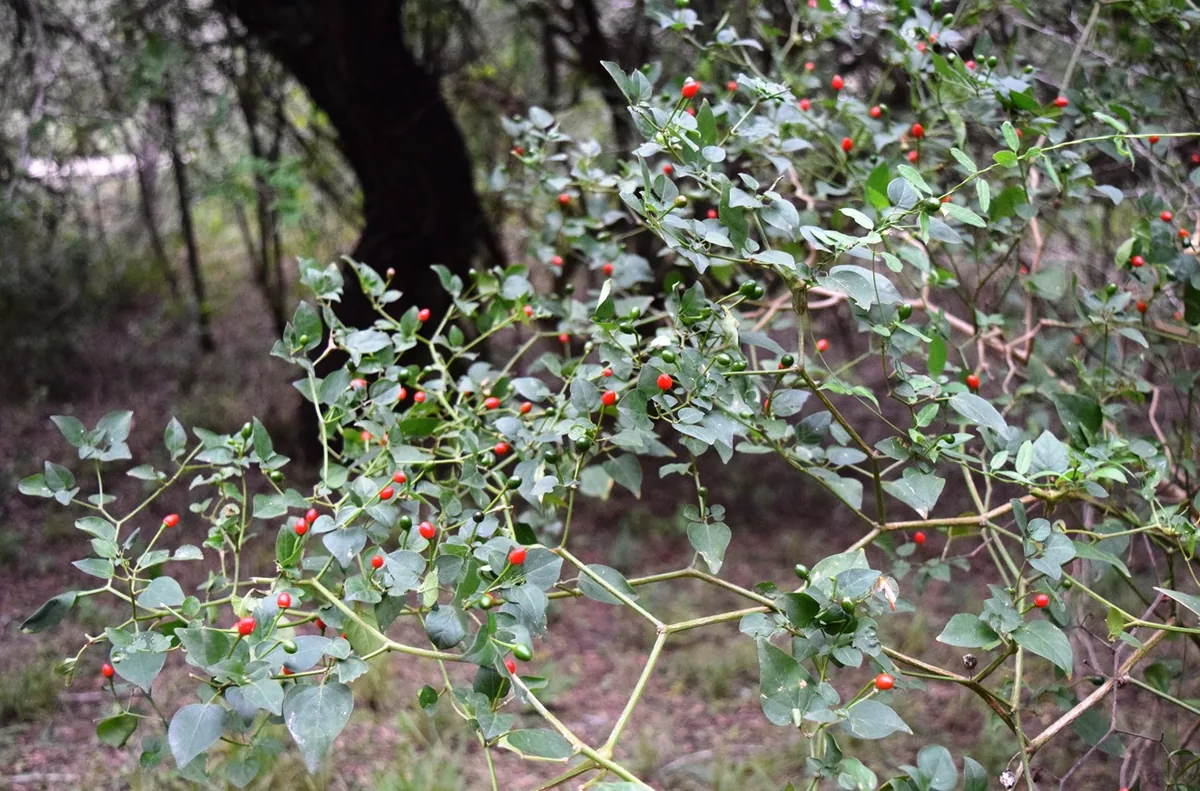
Chiltepin (*Capsicum annuum* var. *glabriusculum*) is the wild ancestor complex behind many domestic chiles—tiny round fruits pack fierce heat and citrusy aroma. Plants are wiry shrubs usually 0.5–2 m tall with small oval leaves and white flowers followed by upright red berries. In Florida and Puerto Rico they behave more like short-lived perennials or true shrubs where frosts are rare, producing year-round flushes during warm wet seasons with a slowdown in cool dry spells. Full sun for dense growth and heaviest fruiting. Use very well-drained soil; container culture helps in rainy sites. Water deeply when dry, but never let roots sit soggy—humid summers demand airflow and gravelly mixes. Seeds: Start indoors or in a shaded nursery bed after last cool spell; germination is faster around 24–30 °C (75–86 °F). Cuttings: Take woody tip cuttings in warm weather, keep humid until roots form—clones preserve a favorite wild-type flavor. Pick red, fully ripe fruits for seed saving and maximum flavor; green fruits are edible but sharper. Dry small batches on screens out of direct tropical midday sun, or freeze for long-term kitchen use.
Permaculture Functions
- Edible: Pea-sized wild-type fruits bring searing heat and citrus aroma to pickles, hot sauces, and dried chile flakes from a wiry shrub -- that fruits in flushes.
- Pest Management: Capsaicin-rich foliage and fruit volatiles can mask host odors or deter some chewing insects -- when woven through solanum and brassica beds.
- Wildlife Attractor: Small white flowers feed native bees -- ripe red drupes feed birds that scatter seed along fence lines if you allow volunteers.
- Ornamental: Upright red fruit clusters on fine gray-green stems read like jewelry on a dry border -- where formal annuals would demand more water.
Companion Planting
- Fennel
- Walnut
Threats & Pressure