About
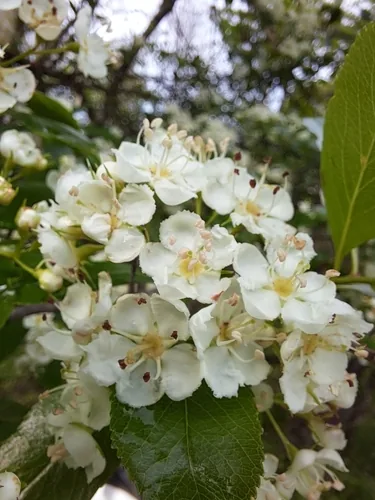
Cockspur hawthorn (Crataegus crus-galli) is a native North American hawthorn of thickets, pastures, and woodland edges, armed with long thorns and bearing white spring blossoms followed by red to maroon haws. It typically forms a broad crown 20–30 feet (6–9 m) tall with glossy, often nearly evergreen leaves in mild winters. In hedgerows it is a livestock barrier and wildlife pantry—plan access routes before the thorns write policy. Full sun to light partial shade; more sun improves flowering and fruiting. Tolerates drought and poor soils once established; occasional deep watering helps young transplants. Avoid planting in low pockets that stay saturated for weeks without oxygen. Sow seed after warm-cold stratification typical for Crataegus; chip hard seed coats to reduce wait time. Hardwood cuttings are possible but slow; graft selected fruit lines if you chase specific haw traits. Collect haws when fully colored and slightly soft for jellies; tannins vary by timing and clone. Prune in late winter to remove crossing branches and improve light inside the crown—wear armor.
Permaculture Functions
- Edible: Maroon haws cook into high-pectin jelly and ketchup analogs -- once tannins are tamed with sugar, time, and straining.
- Wildlife Attractor: White May blossoms swarm with pollinators -- while persistent haws feed thrushes and mammals after sweeter fruit is gone.
- Windbreaker: Broad, often semi-evergreen crown and twig density blunt prairie winds -- across pasture corners and barnyards.
- Border Plant: Long thorns and suckering thickets make honest livestock barriers -- along fence lines without electric wire alone.
- Ornamental: Glossy leaves, showy thorns, and heavy fruit display give Crataegus crus-galli more winter drama -- than flat hedges.
Companion Planting
- Fire Blight — warm wet springs can move bacterial blossom blight through rosaceous flowers
Threats & Pressure
- Apple Maggot
- Bagworm
- Blackberry Psyllid
- Borers
- Cherry Fruit Fly
- Codling Moth
- Cyclamen Mite
- Fall Webworm
- Japanese Beetles
- Lesser Peachtree Borer
- Oriental Fruit Fly
- Oriental Fruit Moth
- Peach Twig Borer
- Peachtree Borer
- Pear Psylla
- Plum Curculio
- Raspberry Beetle
- Raspberry Cane Borer
- Rose Slug
- Scale Insects
- Sparganothis Fruitworm
- Spittlebugs
- Stink Bug
- Strawberry Root Weevil
- Twig Girdlers
- Vine Weevil
- Gall Mite
- Rust Mite
- Spotted Lanternfly
- Brown Marmorated Stink Bug
- Eastern Tent Caterpillar
- Harlequin Ladybird
- Tent Caterpillar