About
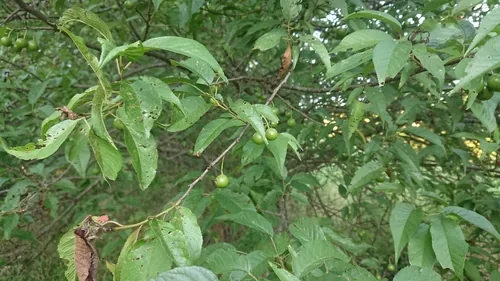
Munson plum (Prunus munsoniana) is a North American wild plum complex member—often thicket-forming—valued for small tart fruit, spring bloom, and wildlife cover on slopes and fence lines. Plants behave as large shrubs to small trees around 8–15 feet (2.5–4.5 m), spreading by suckers into bird-friendly thickets when soil disturbance allows. In temperate permaculture it fills early-succession edges, stabilizes cuts, and supplies jam-grade fruit without pretending to be a supermarket hybrid. Full sun for best flowering and fruit; tolerates light shade with reduced yield. Adapted to a range of soils if drainage is honest; occasional deep watering speeds establishment on dry banks. Mulch to reduce grass competition while suckers expand the thicket by design. Dig suckers with some root in dormancy and transplant immediately. Stratify seed 90–120 days cold-moist, then sow in spring. Thin interior stems after fruiting to reduce fungal lodging and improve air movement. Pick when fruit softens and color shifts fully—often mid-to-late warm season depending on latitude. Process quickly into jams, shrubs, or ferments; thin skins do not imply long storage. Leave some fruit for birds if thicket ecology is part of the design.
Permaculture Functions
- Edible: Small Prunus munsoniana drupes run tart with high pectin, ideal for jams, shrubs, and country wines rather than out-of-hand dessert -- harvest when color fully shifts and flesh softens, then process quickly because thin skins bruise and ferment fast.
- Wildlife Attractor: White spring blossoms feed early native bees on hedgerow warmth; ripe fruit feeds robins, mockingbirds, and thrushes that also sow stones into future suckering thickets -- leave perimeter fruit if you want free expansion.
- Border Plant: Rhizomatous suckers knit livestock lanes, fence lines, and field edges into thorny living fences when spaced and mowed on the outward face -- interior thinning after fruiting keeps fungal lodging from turning the thicket into a twig pile.
- Erosion Control: Fibrous roots anchor cut banks, old pond berms, and road ditches where periodic mowing is the only management -- mulch young suckers the first season so grass does not win the race to the water table.
Companion Planting
- Black Walnut — juglone-sensitive plums may sulk within the drip line; site outside the chemical jurisdiction
- Livestock — pits and cyanogenic tissues are not appropriate browse snacks
Threats & Pressure
- Aphids
- Apple Maggot
- Bagworm
- Blackberry Psyllid
- Cherry Fruit Fly
- Codling Moth
- Cyclamen Mite
- Fall Webworm
- Japanese Beetles
- Lesser Peachtree Borer
- Oriental Fruit Fly
- Oriental Fruit Moth
- Peach Twig Borer
- Peachtree Borer
- Pear Psylla
- Plum Curculio
- Raspberry Beetle
- Raspberry Cane Borer
- Rose Slug
- Sparganothis Fruitworm
- Spittlebugs
- Stink Bug
- Strawberry Root Weevil
- Twig Girdlers
- Vine Weevil
- Gall Mite
- Rust Mite
- Spotted Lanternfly
- Brown Marmorated Stink Bug
- Eastern Tent Caterpillar
- Harlequin Ladybird
- Tent Caterpillar