About
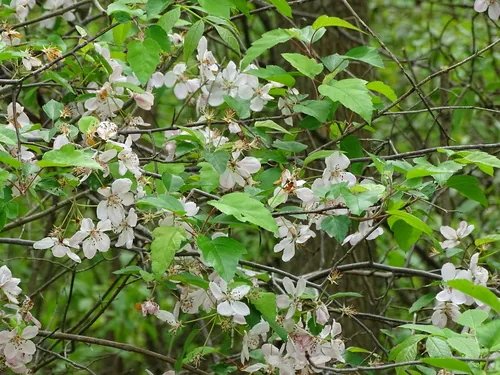
Wild crabapple (Malus fusca) is a Pacific Northwest native crabapple of moist woods and stream edges, bearing white to pink spring flowers and small yellow to red fruit used historically for preserves and pectin. Plants reach 20–40 feet (6–12 m), often multi-stemmed along riparian corridors. This entry uses Malus fusca to reduce duplicate confusion with eastern sweet crabapple entries—verify regional stock tags against your planting goals. Full sun to partial shade; best fruiting with strong light. Moist, well-drained soils suit it; tolerates seasonal high water tables near streams. Mulch to reduce competition during establishment. Sow stratified seed; graft selections for landscape consistency. Prune for open centers to reduce disease pressure. Pick fruit when colored and aromatic—process into jelly; leave some for birds. Bloom follows local spring warmth after frost risk declines.
Permaculture Functions
- Edible: Malus fusca small yellow-red pomes cook to high-pectin jelly -- tartness needs sugar; fruit drops when raccoons bump branches.
- Wildlife Attractor: Spring blooms feed early bees; fruit feeds bears and songbirds along Pacific Northwest streams -- leave some mast if you want otters upstream happy indirectly.
- Pollinator: Five-petaled white-pink clusters open before bigleaf maple leaves -- riparian pollinators get first buffet in cool wet springs.
- Erosion Control: Multi-stem trunks root into seasonally flooded banks -- stabilizes seeps where upland oaks refuse to wade.
Companion Planting
- Fire Blight — prune strikes in dry weather; sanitize tools
- Eastern growers may stock different Malus “wild crabapples”—verify scientific name on tag
Threats & Pressure
- Apple Maggot
- Bagworm
- Blackberry Psyllid
- Cherry Fruit Fly
- Codling Moth
- Cyclamen Mite
- Fall Webworm
- Japanese Beetles
- Lesser Peachtree Borer
- Oriental Fruit Fly
- Oriental Fruit Moth
- Peach Twig Borer
- Peachtree Borer
- Pear Psylla
- Plum Curculio
- Raspberry Beetle
- Raspberry Cane Borer
- Rose Slug
- Sparganothis Fruitworm
- Spittlebugs
- Stink Bug
- Strawberry Root Weevil
- Twig Girdlers
- Vine Weevil
- Gall Mite
- Rust Mite
- Spotted Lanternfly
- Brown Marmorated Stink Bug
- Eastern Tent Caterpillar
- Harlequin Ladybird
- Tent Caterpillar