About
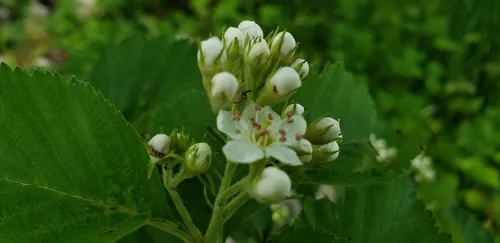
Pear hawthorn (Crataegus calpodendron) is a North American hawthorn of woodland openings, recognized for larger, pear-shaped yellow to bronzy fruit and the usual white spring flower clusters of the genus. It grows as a large shrub or small tree roughly 15–25 feet (4.5–7.5 m), with thorny architecture that rewards honest pruning plans. In hedgerow design it extends the hawthorn toolkit for bird food and early nectar beyond tiny pome species. Full sun to partial shade; best fruiting with strong light. Moist, well-drained loam mimics woodland edge; tolerates seasonal dryness once established with mulch. Avoid compacted swales that stay soggy through warm weather. Stratify seed 90–120 days cold-moist before spring sowing. Graft or bud known selections if you find superior fruit. Prune for an open vase shape to reduce leaf wetness duration after rains. Collect fruit when color shifts fully and flesh yields slightly—haw pomes vary in astringency. Process into jellies or experimental ferments; do not expect pear-crisp texture despite the common name. Leave some fruit for wildlife queues.
Permaculture Functions
- Wildlife Attractor: White Crataegus calpodendron corymbs feed mason bees and hoverflies in cool spring edges -- pear-shaped yellow pomes persist into winter for robins when you skip aggressive hedge shearing.
- Edible: Larger haw pomes mean higher pulp-to-seed ratio for jelly, ketchup, and country wine than many tiny-fruited congeners -- still run sugar-acid tests because flavor runs astringent until fully colored and soft-frozen once.
- Erosion Control: Fibrous roots and thorny thickets armor terrace toes and woodland cuts where leaf litter builds duff -- tolerates partial shade better than sun-demanding apple on the same bank.
- Border Plant: Dense branching with honest thorns defines pasture corners and wildlife hedgerows when coppiced on rotation -- plan paths wide enough that ATVs do not snag eye level on forgotten spines.
Companion Planting
- Fire Blight — prune strikes during dry weather; sanitize tools between cuts
- Hawthorn species hybridize—plant named stock if genetic purity matters to your conservation ethic
Threats & Pressure
- Aphids
- Apple Maggot
- Bagworm
- Blackberry Psyllid
- Cherry Fruit Fly
- Codling Moth
- Cyclamen Mite
- Fall Webworm
- Japanese Beetles
- Lesser Peachtree Borer
- Oriental Fruit Fly
- Oriental Fruit Moth
- Peach Twig Borer
- Peachtree Borer
- Pear Psylla
- Plum Curculio
- Raspberry Beetle
- Raspberry Cane Borer
- Rose Slug
- Sparganothis Fruitworm
- Spittlebugs
- Stink Bug
- Strawberry Root Weevil
- Twig Girdlers
- Vine Weevil
- Gall Mite
- Rust Mite
- Spotted Lanternfly
- Brown Marmorated Stink Bug
- Eastern Tent Caterpillar
- Harlequin Ladybird
- Tent Caterpillar