About
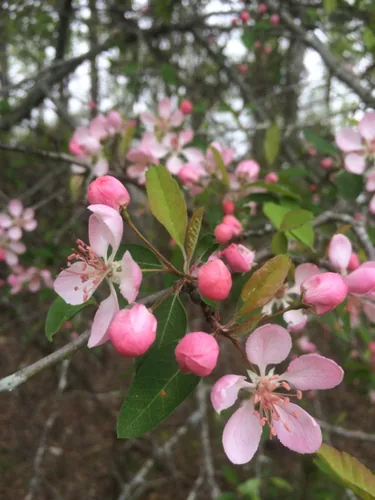
Southern crabapple (Malus angustifolia) is a native thorny shrub to small tree of southeastern North American wood margins, bearing fragrant pink-white spring flowers and small yellow-green crabapples that hang into winter for wildlife. Heights of 10–25 feet (3–7.5 m) occur, often multi-stemmed with suckers. Fruit is tart for human preserves; birds treat it as winter currency. Full sun to partial shade; best flowering with morning sun. Moist, well-drained soils suit it; tolerates periodic dry spells once established with mulch. Avoid waterlogging on heavy clay without grade work. Sow stratified seed; graft selections for landscape consistency. Prune for open centers to reduce scab and fire blight pressure. Pick crabapples when fully colored for jelly; leave some for birds. Bloom follows local spring warmth after frost risk near 28°F (-2°C) declines.
Permaculture Functions
- Edible: Malus angustifolia yellow-green crabs cook into high-pectin jelly -- once you strain seeds and respect thorned branches during harvest swings.
- Wildlife Attractor: Pink apple blossoms feed mason bees along woodland edges before domestic apples open -- while marble-sized fruit fuels songbirds through hungry weeks.
- Pollinator: Clustered rose-family flowers open early enough to sync with native bee emergence -- on Gulf Coastal plain hedgerows.
- Border Plant: Thorny suckering thickets trace livestock lanes -- where fence wire alone would not slow determined animals.
Companion Planting
- Fire Blight — prune strikes in dry weather; sanitize tools
- Thorns — plan paths before planting lottery seedlings
Threats & Pressure
- Apple Maggot
- Bagworm
- Blackberry Psyllid
- Cherry Fruit Fly
- Codling Moth
- Cyclamen Mite
- Fall Webworm
- Japanese Beetles
- Lesser Peachtree Borer
- Oriental Fruit Fly
- Oriental Fruit Moth
- Peach Twig Borer
- Peachtree Borer
- Pear Psylla
- Plum Curculio
- Raspberry Beetle
- Raspberry Cane Borer
- Rose Slug
- Sparganothis Fruitworm
- Spittlebugs
- Stink Bug
- Strawberry Root Weevil
- Twig Girdlers
- Vine Weevil
- Gall Mite
- Rust Mite
- Spotted Lanternfly
- Brown Marmorated Stink Bug
- Eastern Tent Caterpillar
- Harlequin Ladybird
- Tent Caterpillar