About
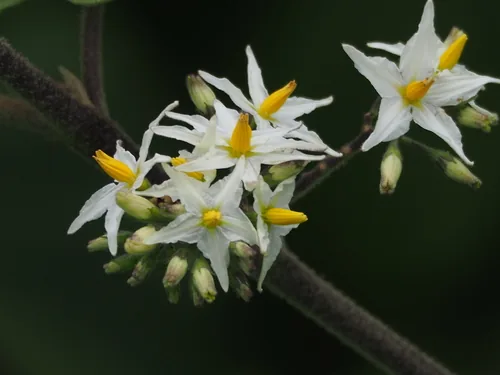
Wild eggplant (Solanum americanum) is a warm-season annual or short-lived perennial nightshade of disturbed fields, gardens, and roadsides across the Americas and many tropical regions. Small white flowers yield clusters of glossy black berries on branching plants. Some populations have a history of careful culinary use after ripeness checks; others are best treated as toxic look-alike practice dummies—identification and local genotype knowledge matter more than optimism. Full sun for fruiting; tolerates part shade with fewer berries. Average to moist, fertile disturbed soils accelerate growth—classic garden gate-crasher. Water evenly during fruit fill if studying domestication potential; drought during flowering reduces set. Self-sows freely; sow seed after last frost indoors or direct where trials are isolated. Do not distribute outside regions where it is regulated. Clone via cuttings only for controlled research, not casual sharing. If pursuing documented edible use, harvest only fully ripe, soft black berries with verified population edibility; discard green or partially green fruit. Cooked preparations are traditional in some cultures—never experiment casually. Leave plants for wildlife where human use is uncertain.
Permaculture Functions
- Edible: Solanum americanum ripe soft black berries enter some Caribbean and Asian kitchens after parboiling -- green berries contain solanine; genotype edibility varies by population, not optimism.
- Wildlife Attractor: Small white star flowers feed syrphids; birds paint fences purple with seed-filled droppings -- plan containment if neighbors hate nightshades.
- Medicinal: Steroidal glycoalkaloid research exists -- leave clinical use to labs; home experiments with nightshades age poorly.
Companion Planting
- Toxic look-alikes and green fruit — Solanum identification errors can hospitalize people; verify with regional experts
- Livestock poisoning — berries and foliage risky to grazers; not a poultry forage plant
- Invasive potential — prolific seeders; remove unwanted plants before fruit drop
Threats & Pressure