About
Wonderberry (Solanum retroflexum) is a fast-growing annual nightshade developed for garden use, producing clusters of small dark berries on branching plants in warm summers. It sits in the tangled taxonomy of black nightshade relatives—treat every seed source as a distinct genotype until proven otherwise. In permaculture it is a novelty berry for jam trials and insectary rows, not a staple calorie crop. Full sun for sweetest fruit set; light shade reduces yields. Rich, moist, well-drained garden soils accelerate growth; drought during flowering collapses fruit loads. Even watering prevents blossom end issues common in nightshades. Start seed indoors 6–8 weeks before last frost or direct-sow after soil warms. Transplant carefully; young stems break. Stake or cage if laden with fruit in windy sites. Pick berries fully ripe, soft, and uniformly dark for cooked jams or pies; heat is traditional. Taste-test small amounts from your specific plants before scaling recipes. Frost ends the season—harvest or cover if a late cold snap threatens.
Permaculture Functions
- Edible: Solanum retroflexum black berries need heat and sugar in jam -- solanine risk in green fruit; genotype lines differ; taste-test cooked samples before scaling batches.
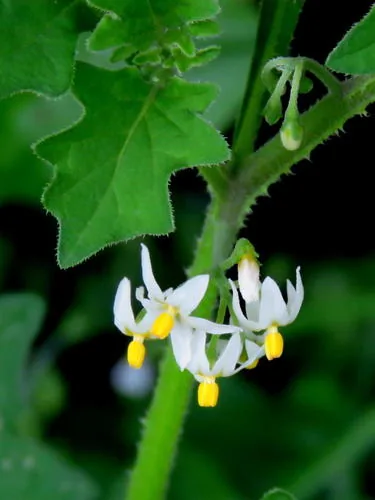
- Ornamental: Nightshade shrublets with tiny white flowers and glossy berries read curious in annual beds -- not a backbone hedge.
- Wildlife Attractor: Generalist bees work flowers; catbirds strip ripe clusters -- net if human jam beats bird charity.
Companion Planting
- Nightshade chemistry variability — verify edibility for your seed source; green berries are not food
- Self-sowing — remove unwanted volunteers before they fruit if escapes are a concern
Threats & Pressure