About
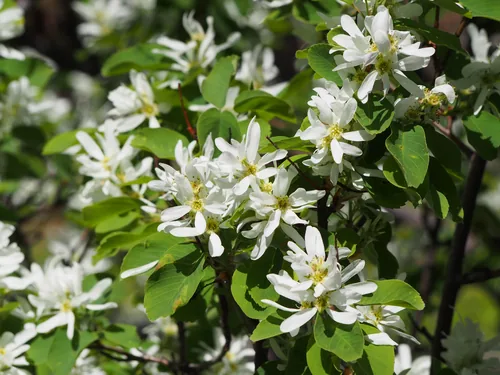
Serviceberry (Amelanchier canadensis) is a multistemmed eastern North American shrub to small tree of moist woods edges and old fields, bearing white early-spring flowers and sweet reddish-purple pomes in early summer. Heights of 15–25 feet (4.5–7.5 m) occur in ideal sites, often with suckering colonies along fencerows. It bridges forest and field in permaculture designs, offering human fruit, bird food, and early pollinator support. Full sun to partial shade; heavier fruiting with more light and airflow. Moist, well-drained, humus-rich soils suit it; tolerates clay if drainage is not stagnant. Mulch to reduce competition; water during drought in the first two years. Sow stratified seed; suckers transplant in early spring. Softwood cuttings under mist for clones. Prune for an open vase shape to reduce disease pressure. Pick berries when fully colored and softening—process quickly for pies and jams. Bloom follows last hard frosts near 24°F (-4°C) in northern climates. Leave some fruit for birds if hedgerow sharing matters.
Permaculture Functions
- Edible: Amelanchier canadensis reddish-purple pomes ripen to sweet-tart balance for pies early summer -- harvest windows overlap with cedar waxwing migrations so netting ethics matter.
- Wildlife Attractor: Early summer fruit fuels birds along forest margins -- while multistem thickets hide nests at eye level.
- Pollinator: Drooping white racemes open before hardwood canopy closure -- to feed mason bees and early hoverflies in cool soil situations.
- Border Plant: Suckering rows trace woodland edges, hedgerows, and pond skirts -- where taller timber would shade field crops.
Companion Planting
- Cedar-apple rust — separate from alternate juniper hosts when disease pressure is high
- Bird competition — plan netting ethics or shared harvest rows
Threats & Pressure
- Aphids
- Apple Maggot
- Bagworm
- Blackberry Psyllid
- Cherry Fruit Fly
- Codling Moth
- Cyclamen Mite
- Fall Webworm
- Japanese Beetles
- Lesser Peachtree Borer
- Oriental Fruit Fly
- Oriental Fruit Moth
- Peach Twig Borer
- Peachtree Borer
- Pear Psylla
- Plum Curculio
- Raspberry Beetle
- Raspberry Cane Borer
- Rose Slug
- Sparganothis Fruitworm
- Spittlebugs
- Stink Bug
- Strawberry Root Weevil
- Twig Girdlers
- Vine Weevil
- Gall Mite
- Rust Mite
- Spotted Lanternfly
- Brown Marmorated Stink Bug
- Eastern Tent Caterpillar
- Harlequin Ladybird
- Tent Caterpillar