About
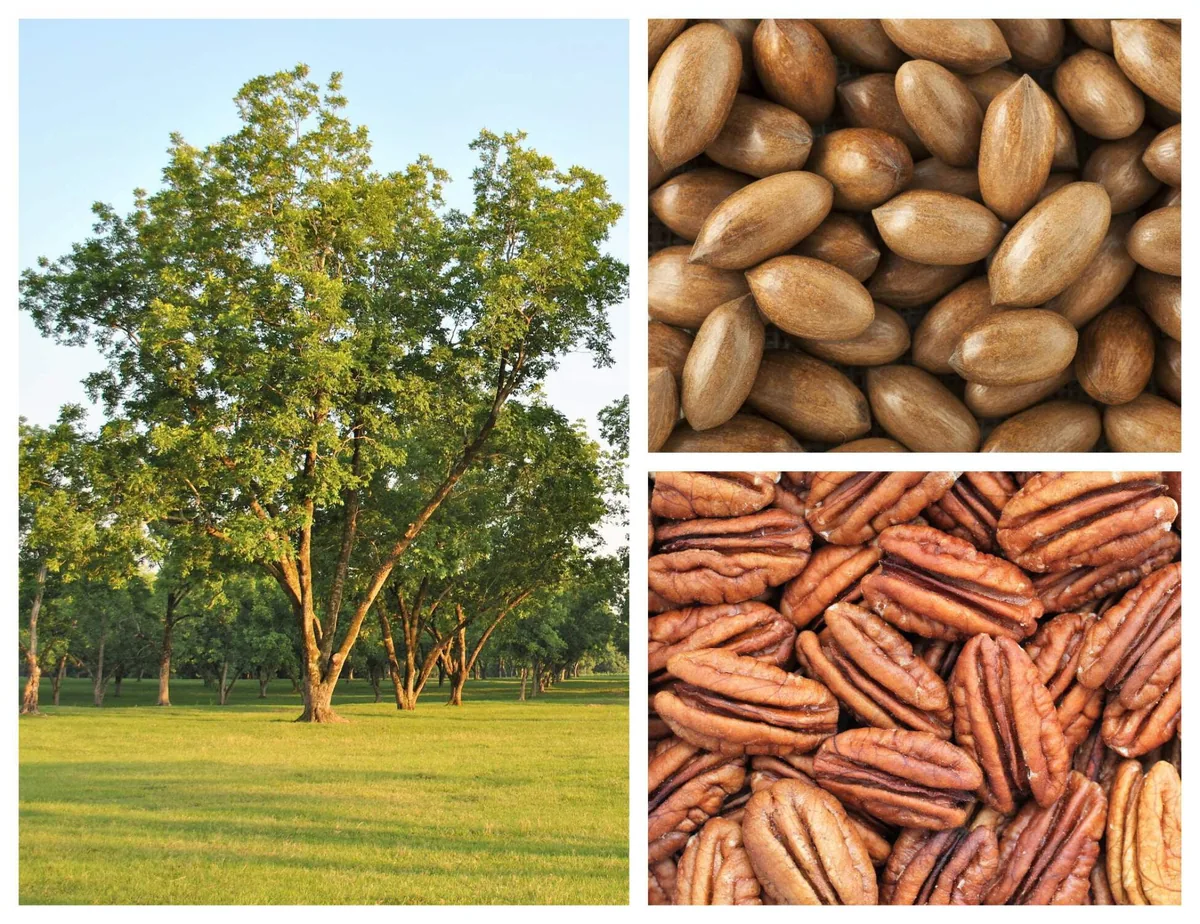
The Pecan Tree (Carya illinoinensis) is a large deciduous tree native to central and eastern North America, known for its delicious and nutrient-rich nuts. Mature trees can reach heights of 18–25 meters (60–80 feet) with a spreading canopy, making them excellent shade providers. Pecan trees have a long lifespan, often exceeding 100 years, and can live up to 400 years under optimal conditions. Prefers full sun exposure for optimal growth and nut production. Thrives in deep, well-drained soils with a slightly acidic to neutral pH (6.0–7.0). Requires consistent moisture, especially during the growing season; however, mature trees are somewhat drought-tolerant. Grafting: Commonly used to ensure desirable nut characteristics and faster fruiting, typically within 3–7 years. Seeds: Can be grown from seeds, but seedlings may take 10 years or more to produce nuts and may not retain parent tree qualities. Nuts mature in autumn, usually from late September to November. Harvest when the outer husks split open, allowing the nuts to fall to the ground. Collect fallen nuts promptly to prevent spoilage or predation by wildlife.
Permaculture Functions
- Edible: Carya illinoinensis thin-shelled nuts crack for pecan pie, pralines, and cold-press oil once kernels reach full oil stage in late autumn -- alternate-bearing is real; thin crop mechanically on heavy years to protect scaffold wood.
- Wildlife Attractor: Mast feeds blue jays, squirrels, and feral hogs in southern orchards; shaggy bark hides roosting bats -- leave perimeter drops if wildlife calories matter more than every nut entering the shed.
- Windbreaker: 20–30 m broad crowns in multi-row belts trim advective freezes and desiccating winds across pecan alleys and poultry yards -- interior shade stays dappled enough for winter legume covers if you manage limb lift.
- Erosion Control: Deep taproots and spreading laterals anchor river levees and terrace fills where annual crops would wash -- pair with grassed waterways downhill to catch silt from mechanical harvest traffic.
- Animal Fodder: Whole cracked nuts, press cake, and clean shell fragments enter cattle finishing rations for energy density -- watch aflatoxin testing in humid finishes before feeding moldy windfall loads.
- Dynamic Accumulator: Leaf litter returns potassium and zinc to surface mulch rings under drip irrigation emitters -- sweep leaves back under canopy instead of hauling to landfill so micronutrients recycle with decomposition fungi.
Companion Planting
Threats & Pressure