About
Ground cherry (Physalis pruinosa) is a warm-season solanaceous annual related to tomatillos, producing sweet-tart berries inside papery lanterns that drop when ripe—nature's portion control with built-in packaging. Native and naturalized forms occur across much of temperate North America; cultivated selections improve size and flavor for jam, pie, and fermentation projects. It fits annual polycultures with corn and beans, row edges, and containers where nightshade literacy is assumed, not optional. Full sun; fertile, well-drained loam with steady moisture yields the largest lanterns. Heat-loving; growth stalls below about 50°F (10°C). Mulch soil to reduce splash-borne diseases and keep fallen fruit clean. Avoid waterlogging—damping-off and root rots murder seedlings. Start seeds indoors 6–8 weeks before last frost or direct-sow in warm soil. Stake or cage like determinate tomatoes if winds roll branches. Gather fallen lanterns when husks dry and berries color inside; flavor sweetens off-plant for a few days in the husk. Remove husks before cooking; process ripe fruit only—green berries retain solanine baggage.
Permaculture Functions
- Edible: Physalis pruinosa ripens sweet-tart berries inside dry, papery husks -- gather fallen lanterns when husks bleach and fruit colors, then husk before cooking because green berries carry solanine-related baggage.
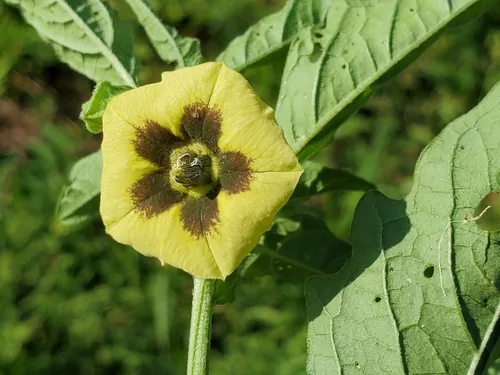
- Wildlife Attractor: Bumblebees work the nodding yellow flowers, and ground-foraging birds clean dropped fruit if you leave a few rows unclaimed -- good trade if you want insect patrols along the bed edge.
- Ground Cover: Sprawling stems and wide leaves shade soil in warm-season annual polycultures -- mulch beneath to keep splashed soil off lower leaves and reduce fungal spotting.
- Ornamental: Bladder-like calyxes turn straw-colored and inflate around fruit -- they read as kinetic jewelry in kitchen gardens where you want edible drama without nonproductive ornamentals.
Companion Planting
- Green unripe fruit and calyx residues contain solanine-related compounds—wait for full ripeness inside dry husks
Threats & Pressure