About
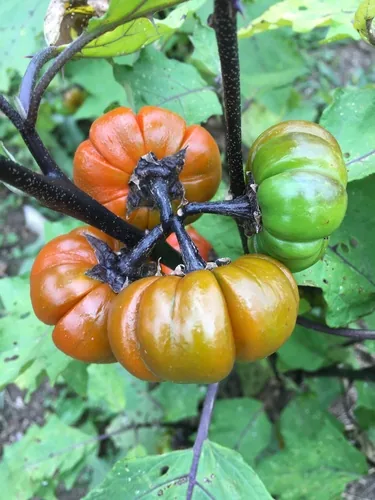
Scarlet eggplant (Solanum aethiopicum) is a variable African nightshade grown across tropical and subtropical Americas as a leafy green, a gourd-shaped fruit type, or an ornamental with lobed leaves and bright orange-red berries. Forms differ wildly—buy labeled seed. It suits warm kitchen gardens, poultry forage strips, and novelty beds where true eggplant needs fewer thorns and more color. Full sun for compact growth and better fruit set. Moderate moisture; erratic drought invites spider mites and bitter leaves. Rich, well-drained soil; containers need fast mix and daily checks in heat. Seeds started indoors 6–8 weeks before last warm weather; transplant after soil warms. Semi-hardwood cuttings for perennial clones in frost-free climates. Stake branching types when fruit loads stems. Harvest young leaves for cooking where the chosen cultivar is bred for greens. Pick fruit forms at the stage your cultivar demands—many types are bitter if wrong maturity. Wear gloves around hairy prickly forms; solanaceous spines are earnest.
Permaculture Functions
- Edible: Solanum aethiopicum exists as leafy gilo types, bitter-fruited pickles, and spine-armored ornamentals -- buy labeled African cultivars before you stew leaves or roast fruit because alkaloid curves differ across forms.
- Ornamental: Lobed purple foliage and traffic-light fruit clusters read like nursery annuals -- yet survive as woody shrubs in frost-free alley beds.
- Animal Fodder: Verified-safe cultivar leaves chop into poultry mash during flush growth -- once solanine protocols match your flock experiment notes.
- Pollinator: Small white star blooms with yellow anthers release pollen in heat that pulls sweat bees and halictids -- along Solanum rows.
Companion Planting
- Unripe fruit and uncertain cultivars can be toxic—verify type before feeding animals or children
Threats & Pressure
- Andean Potato Weevil
- Aphids
- Broad Mite
- Colorado Potato Beetle
- Corn Earworm
- Cyclamen Mite
- Flea Beetles
- Greenhouse Whitefly
- Pepper Weevil
- Reniform Nematode
- Root Aphid
- Shore Fly
- Spider Mites
- Stink Bug
- Tobacco Budworm
- Tomato Hornworms
- Whiteflies
- Wireworm
- Spotted Cucumber Beetle
- Brown Marmorated Stink Bug