About
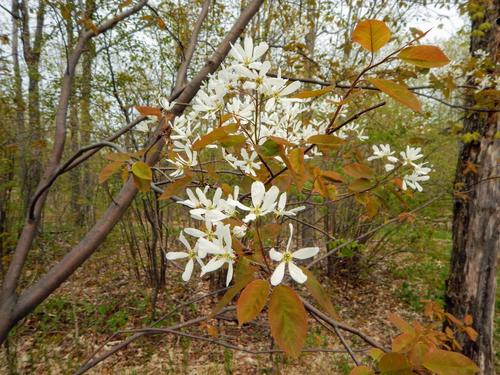
Smooth serviceberry (Amelanchier laevis) is a small native tree of eastern North American woods edges, with smooth gray bark, white spring flowers, and sweet dark berries in early summer. It typically reaches 15–25 feet (4.5–7.5 m), often single-trunked compared with suckering relatives. Use it as an ornamental understory tree, early pollinator support, and bird food system where cedar-apple rust is managed. ☀️💧 Sun and Water Requirements: Full sun to partial shade; best fruiting with strong light. Moist, well-drained, humus-rich soils suit it; tolerates rocky slopes once established. Mulch to keep roots cool; water during drought in early years. ✂️ Propagation: Sow stratified seed; graft named selections for landscape consistency. Prune for single-leader tree form or multi-stem as desired; open canopy improves airflow. 🌾 Harvest / Best Use Timing: Pick berries when dark and soft—process quickly. Bloom follows last hard frosts near 24°F (-4°C) in northern sites. Leave some fruit for birds if sharing matters.
Permaculture Functions
- Edible: Sweet berries support pies and jams where bird negotiations succeed.
- Wildlife Attractor: Flowers feed early pollinators; fruit feeds birds.
- Pollinator: Spring bloom fills a narrow nectar window at forest edges.
- Ornamental: Smooth bark and fall color add landscape value beyond fruit alone.
Practitioner Notes
- Smooth bark is the namesake—rough-barked look-alikes are different Amelanchier gossip.
- Single-trunk specimens read as trees—multi-stem clones read as large shrubs; choose at planting.
- Berries darken fast—morning harvest beats afternoon starlings.
- Rust is a postcard from junipers—design distance, not denial.
Companion Planting
- Wild Columbine — spring forb beneath open canopy before deep shade arrives
- Serviceberry — related Amelanchier neighbor for staggered bloom if both are allowed
- Chives — low allium edge along driplines
- Cedar-apple rust — separate from alternate juniper hosts when disease pressure is high
- Birds — plan harvest timing or netting ethics
Pest Pressure