About
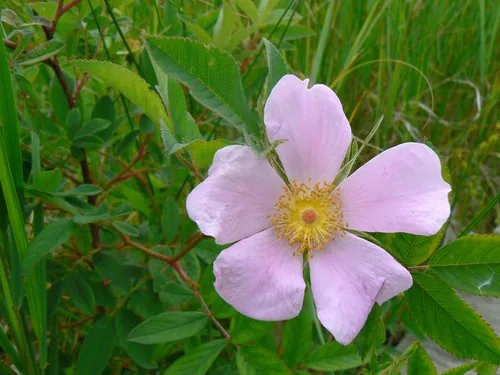
Virginia rose (Rosa virginiana) is a native eastern North American rose forming upright to arching canes with pink fragrant flowers in summer and red hips persisting into winter. Plants reach 3–6 feet (0.9–1.8 m), often in moist to average soils at meadow edges. Hips support teas and jellies where processing respects tannins; petals flavor syrups on unsprayed plants. Full sun to light partial shade; best flowering with strong light. Average to moist, well-drained soils suit it; tolerates clay if drainage moves. Mulch during establishment. Hardwood cuttings in dormancy; stratified seed for diversity. Renewal-prune old canes after several years. Gather hips when fully red and slightly soft—process for tea or jelly. Peak bloom tracks mid-summer warmth.
Permaculture Functions
- Wildlife Attractor: Rosa virginiana single pink flowers feed native bees; red hips persist for winter songbirds -- leave some canes unpruned if you want cedar waxwing drama.
- Border Plant: Thorny arching canes to 6 ft hedge wet meadow edges -- renewal pruning every few years keeps fruiting wood young without losing the barrier.
- Edible: Tart hips and perfumed petals make syrup and tea on unsprayed plants -- tannins demand cooking or sweetening; verify identity before any hip wine experiments.
- Ornamental: Open, single flowers beat double garden roses for pollinator access -- glossy summer foliage reads native-chic in eastern sun.
Companion Planting
- Thorns — plan paths before romantic strolls
- Rose Rosette Disease — remove infected canes; improve spacing where mites thrive
Threats & Pressure
- Aphids
- Apple Maggot
- Bagworm
- Blackberry Psyllid
- Cherry Fruit Fly
- Codling Moth
- Cyclamen Mite
- Fall Webworm
- Japanese Beetles
- Lesser Peachtree Borer
- Oriental Fruit Fly
- Oriental Fruit Moth
- Peach Twig Borer
- Peachtree Borer
- Pear Psylla
- Plum Curculio
- Raspberry Beetle
- Raspberry Cane Borer
- Rose Slug
- Sparganothis Fruitworm
- Spider Mites
- Spittlebugs
- Stink Bug
- Strawberry Root Weevil
- Twig Girdlers
- Vine Weevil
- Gall Mite
- Rust Mite
- Spotted Lanternfly
- Brown Marmorated Stink Bug
- Eastern Tent Caterpillar
- Harlequin Ladybird
- Tent Caterpillar