About
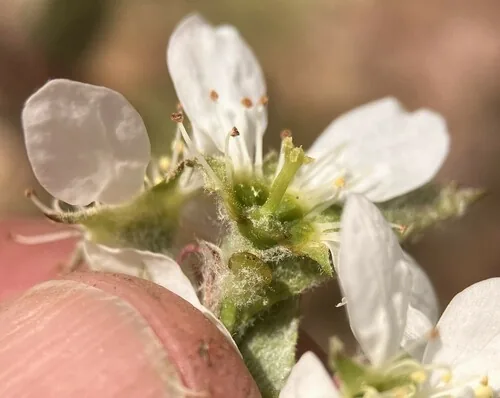
Running serviceberry (Amelanchier stolonifera) is a low, stoloniferous deciduous shrub of northern North American bogs, shores, and moist woods, bearing white spring flowers and small dark edible pomes in early summer. Plants typically stay 1–3 feet (30–90 cm) tall while spreading into colonies via runners. It is a ground-layer fruit for cold, acidic, moist sites where taller serviceberries would sulk or shade too aggressively. Full sun to partial shade; best fruiting with good light and steady moisture. Acidic, organic, moist but well-drained soils suit it; tolerates short dry spells once established in cool climates. Mulch with leaf mold; avoid hot, dry berms without irrigation. Divide stolon sections with roots in early spring. Sow stratified seed for diversity. Prune out old stems after several years to renew fruiting wood and reduce interior twig tangle. Pick pomes when dark and softening—yield is modest, so plan small-batch jams. Bloom tracks late spring after hard frost risk near 28°F (-2°C) in northern sites. Leave some fruit for ground birds if colony ethics matter.
Permaculture Functions
- Edible: Dark Amelanchier stolonifera pomes ripen in early summer with sweet-tart juice suited to small-batch jam -- where harvest volume stays modest but flavor is sharp and clean.
- Wildlife Attractor: White spring blooms feed early pollinators ahead of many summer crops -- soft fruit feeds ground-foraging birds when colonies run along bog margins.
- Ground Cover: Runnering stems knit into knee-high mats that occupy moist acidic openings -- without the wall of shade taller serviceberries cast.
- Border Plant: Low stature visually anchors pond lips and wet woodland edges -- while defining paths where taller shrubs would read as barriers.
Companion Planting
- Hot dry sites — chlorosis and colony collapse without moisture honesty
- Cedar-apple rust complex—mind alternate hosts when designing disease-quiet guilds
Threats & Pressure
- Aphids
- Apple Maggot
- Bagworm
- Blackberry Psyllid
- Cherry Fruit Fly
- Codling Moth
- Cyclamen Mite
- Fall Webworm
- Japanese Beetles
- Lesser Peachtree Borer
- Oriental Fruit Fly
- Oriental Fruit Moth
- Peach Twig Borer
- Peachtree Borer
- Pear Psylla
- Plum Curculio
- Raspberry Beetle
- Raspberry Cane Borer
- Rose Slug
- Sparganothis Fruitworm
- Spittlebugs
- Stink Bug
- Strawberry Root Weevil
- Twig Girdlers
- Vine Weevil
- Gall Mite
- Rust Mite
- Spotted Lanternfly
- Brown Marmorated Stink Bug
- Eastern Tent Caterpillar
- Harlequin Ladybird
- Tent Caterpillar