About
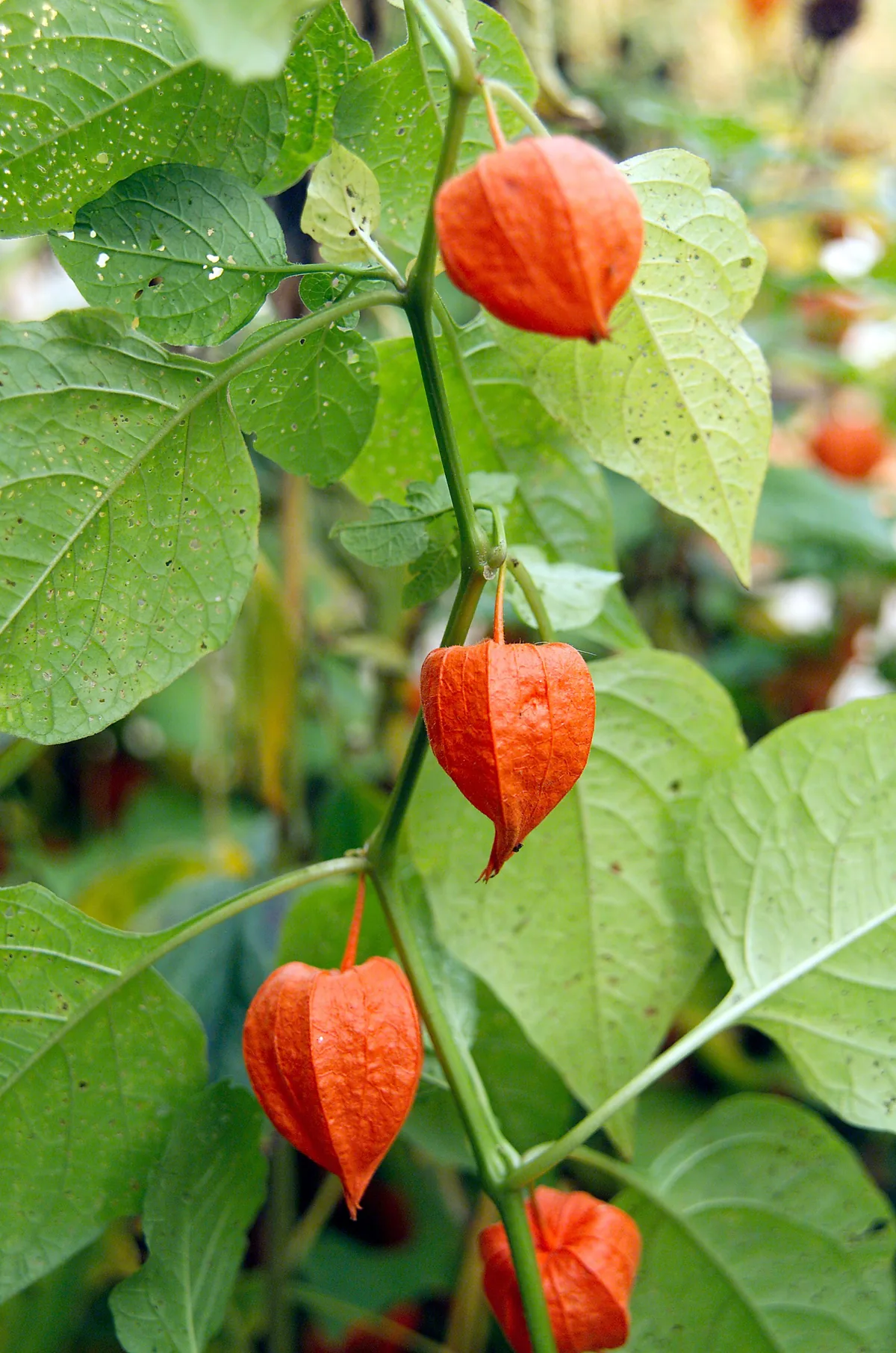
Chinese Lantern (*Physalis alkekengi*) is a vigorous herbaceous perennial native to Europe and Asia. It grows up to 60 cm (24 inches) tall, featuring ovate leaves and nodding, creamy-yellow bell-shaped flowers that bloom in summer. The plant is renowned for its distinctive, bright orange to red, papery calyces that encase the fruit, resembling lanterns. These calyces appear in autumn and are often used in dried floral arrangements. Chinese Lantern thrives in full sun to partial shade and prefers moist, well-drained soils. It spreads by underground rhizomes and can become invasive if not managed properly. Sun: Prefers full sun but tolerates partial shade. Water: Requires moist, well-drained soil; regular watering is beneficial, but avoid waterlogging. Seed: Sow seeds indoors in early spring. Transplant seedlings outdoors after the last frost. Division: Divide rhizomes in early spring or autumn to control spread and propagate new plants. Harvest the vibrant calyces in autumn when they are fully colored for use in decorations. Handle with care, as unripe fruits and other plant parts can be toxic if ingested.
Permaculture Functions
- Edible: Fully ripe berries inside orange husks are mild and jam-friendly -- green fruit, leaves, and calyx tissue stay solanaceous-toxic and belong nowhere near a tasting spoon.
- Medicinal: Physalis relatives enter old European herbals as cooling, mildly diuretic teas -- modern use should stay conservative and well referenced.
- Pollinator: Nodding yellow bells offer pollen and nectar to bumblebees and smaller bees -- along partly shaded bed edges.
- Ground Cover: Rhizomatous spread forms a dense herbaceous carpet that knits soil -- on contained banks unless you edit runners each year.
Field Observations
- No field observations yet
Companion Planting
- Potato
- Tomato
Threats & Pressure