About
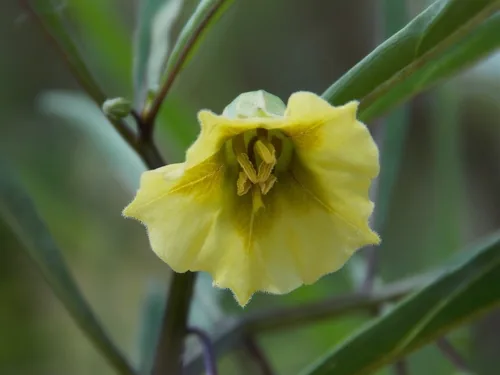
Coastal groundcherry (Physalis angulata) is a warm-season annual or short-lived perennial nightshade of disturbed sandy fields, roadsides, and coastal margins in tropical and subtropical climates, branching roughly 1–3 feet (30–90 cm) with yellow flowers and lantern-like husks around small berries. Ripe fruit can be sweet-tart like other Physalis, but green tissues and unripe berries contain solanaceous toxins—harvest only fully ripe fruit from known plants. It volunteers freely where winters are mild. Full sun; prefers well-drained sandy or loamy soils with moderate moisture during growth. Tolerates coastal salt spray better than many nightshades once established. Poor performance in heavy shade or chronically waterlogged clay. Direct-sow after soil warms; barely cover seed. Transplant volunteers before flowering if curating a bed edge. Save seed from fully ripe dropped fruits after tasting confirms palatability of that clone. Pick when husk dries tan and berry inside is fully colored and aromatic—discard any bitter or firm-green fruit. Use fresh or process into jam quickly; store-husked berries in refrigeration short-term only.
Permaculture Functions
- Edible: Tan-husked ripe berries taste sweet-tart like other Physalis once fully colored -- green tissue stays toxic like every garden nightshade.
- Ground Cover: Branching stems sprawl knee-high through sandy fields and bed edges, covering irrigation leaks and disturbed mulch faster -- than many annuals.
- Wildlife Attractor: Yellow bells feed bees -- dropped fruit feeds mockingbirds and doves if you leave lower branches unstripped.
- Dynamic Accumulator: Rapid warm-season growth pulls nitrogen and minerals from lean sand into leafy stems -- that compost down after frost.
Companion Planting
Threats & Pressure