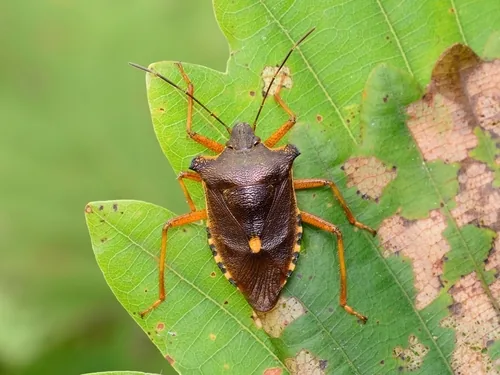
Field Identification
If new growth is curling, yellowing, sticky, or chewed, stink bug may already be on the plant. This pest often builds quietly, then damage appears all at once. Feeding stress weakens growth, reduces yield, and opens the door to secondary disease. Early cleanup is much easier than fighting a full population surge later.
Inspect the newest growth first: leaf undersides, flower buds, stem joints, and tender tips where pests gather. Look for body shape, color, eggs, cast skins, honeydew, webbing, or fresh puncture marks. A hand lens and a white paper tap test help reveal small life stages. Matching visible pests with fresh plant damage confirms active infestation.
Not sure what you have? Use the symptom diagnosis tool →
How to Deal With It
Organic Control Methods
Egg parasitoid wasps (scelionid and platygastrid wasps) are the most important natural enemies — they lay eggs inside stink bug eggs, destroying them before they hatch. Avoid broad-spectrum sprays during egg-laying windows to protect these tiny wasps. Assassin bugs actively hunt stink bug nymphs — provide diverse habitat and permanent ground cover to support them. Spiders are generalist predators that catch adults. Long-term biological control improves in gardens with diverse plantings and minimal pesticide use.
Stink bugs pierce plant tissue and inject digestive enzymes, causing sunken cat-faced spots on fruit and wilting on shoots. They overwinter as adults in leaf litter and structures. Remove and compost or destroy leaf litter and crop debris in fall. Row covers on young transplants exclude them during the most vulnerable establishment period. Ripe fruit left on plants concentrates stink bugs — harvest promptly.
Trap cropping with sunflower, millet, or mustard concentrates stink bugs for targeted removal — mow or destroy trap strips after peak aggregation. Timely harvest reduces fruit exposure. Remove weedy hosts like dock and wild mustard along garden edges where bugs aggregate and reproduce. Interplant with garlic, catnip, and strongly aromatic herbs at bed edges as deterrents.
Shake bugs into soapy water in early morning or evening when they are sluggish. A shop vacuum catches dense aggregations on trap plants efficiently. Row covers on young transplants prevent establishment during vulnerable periods. Sticky traps monitor adult presence and help time management without replacing active scouting on fruit.
Neem oil and insecticidal soap deter nymphs with thorough coverage — adults have a thick cuticle that limits spray penetration. Kaolin clay on fruit surfaces reduces probing damage and is safe for beneficials. Pyrethrin provides knockdown but harms all insects and is a last resort only — apply at dusk, never near flowers. Repeat applications are needed since stink bugs actively reinvade from surrounding areas.
Let Nature Handle It
Natural Enemies
- Egg Parasitoid Wasps
- Assassin Bugs
- Spiders
Threat Map