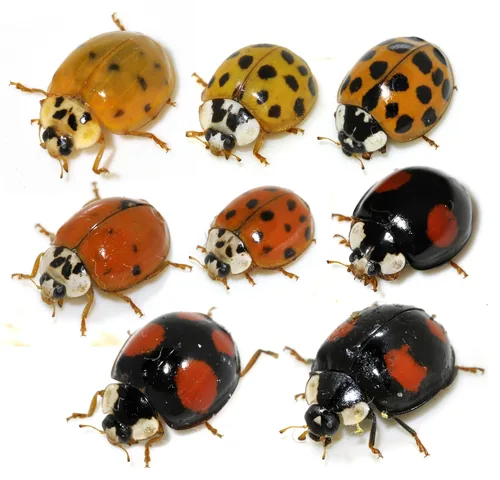
Field Identification
If new growth is curling, yellowing, sticky, or chewed, harlequin ladybird may already be on the plant. This pest often builds quietly, then damage appears all at once. Feeding stress weakens growth, reduces yield, and opens the door to secondary disease. Early cleanup is much easier than fighting a full population surge later.
Inspect the newest growth first: leaf undersides, flower buds, stem joints, and tender tips where pests gather. Look for body shape, color, eggs, cast skins, honeydew, webbing, or fresh puncture marks. A hand lens and a white paper tap test help reveal small life stages. Matching visible pests with fresh plant damage confirms active infestation.
Not sure what you have? Use the symptom diagnosis tool →
How to Deal With It
Organic Control Methods
The harlequin ladybird (Harmonia axyridis) is itself a predator — it eats aphids, scale, and other soft-bodied pests aggressively. The problem is it also outcompetes and eats native ladybug species and contaminates grapes and wine with its defensive chemical when harvested accidentally. Build habitat for diverse native predators — lacewings, syrphid flies, native ladybugs, parasitic wasps — so aphid control does not depend on Harmonia alone. Long-term landscape diversity reduces the boom-bust aphid cycles that trigger explosive Harmonia reproduction.
Harlequin ladybirds aggregate in enormous numbers on south-facing warm walls, window frames, and structures in fall before overwintering. Seal homes in September before flights begin — caulk gaps, add fine mesh to vents, seal window frames. In vineyards and berry patches, the real problem is accidental harvest contamination — beetles concentrate on the ripest, most sugar-rich clusters. Monitor from veraison onward and harvest promptly when sugar peaks rather than letting fruit hang.
Harvest grapes and berries promptly when ripe — beetles concentrate on the ripest clusters and contaminate harvest with their defensive secretion which causes off-flavors in wine even at very low concentrations. Avoid leaving damaged fruit in rows. In new vineyards, consider proximity to large overwintering structures. Keep detailed records of which rows accumulate beetle pressure each season — patterns repeat and allow targeted management.
For indoor aggregations, use a shop vacuum with a soapy water tank to collect masses without crushing beetles (crushing releases the defensive chemical that stains and smells). Seal all entry points before fall flights. Row covers on berry crops during beetle aggregation season reduce contamination risk. Fine mesh on greenhouse vents prevents entry while maintaining airflow.
No spray is ap ladybird aggregations on structures — vacuuming and exclusion are the only responsible approaches. On small fruit plots before harvest, kaolin clay can reduce landing and probing on fruit surfaces. Avoid insecticidal soap as a mass control tool — it kills native beneficial insects sharing the same habitat. The goal is exclusion and harvest timing, not chemical control.
Let Nature Handle It
Natural Enemies
- Parasitic Wasps (Dinocampus coccinellae)
- Pathogenic Fungi (Beauveria bassiana)
- Insectivorous Birds
- Assassin Bugs (Reduviidae)
Threat Map