About
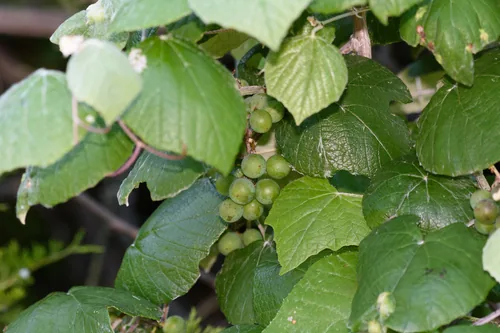
Mustang grape (Vitis mustangensis) is a high-climbing deciduous vine native to the south-central United States and adjacent northeastern Mexico, common in woodland margins and sandy soils. Leaves are thick, often slightly white beneath, and fruit clusters bear small dark berries with a tart, musky flavor that cooks into jelly better than it eats out of hand. It is a resilient native grape for trellises, living pergolas, and wildlife corridors where European wine grapes struggle with humidity and disease. Full sun for heaviest fruiting; tolerates partial shade with fewer clusters. Drought tolerant once established in deep sand; young vines need regular water. Well-drained to sandy-loam soils; tolerates poor rocky ground if roots can run. Hardwood cuttings taken in dormancy, callus in moist medium, pot before spring flush. Layering low canes to soil in early spring; sever when rooted. Seeds require cold-moist stratification and years to fruit—clonal methods are practical. Pick fruit when fully colored and slightly soft, usually mid to late summer into early autumn by climate. Heat with sugar and strain for jelly, syrup, or wild-ferment experiments—skins are tannic. Prune in winter to limit weight on supports and improve air circulation.
Permaculture Functions
- Edible: Small Vitis mustangensis berries stay musky-tannic raw but juice into intense jellies, shrubs, and country wines after heat, sugar, and straining -- pick fully colored, slightly soft clusters mid-to-late warm season before birds take the tax.
- Wildlife Attractor: Dark fruit feeds foxes, raccoons, and songbirds; tangled deciduous canopy gives catbirds and cardinals nesting cover along humid woodland margins -- expect heavy wildlife tax unless you net choice clusters.
- Shade Provider: Thick summer leaf wall on pergolas, arbors, or livestock lanes cuts west-wall heat load and afternoon glare -- winter dormancy returns light, so pair with evergreen understory where year-round shade is mandatory.
Companion Planting
Threats & Pressure