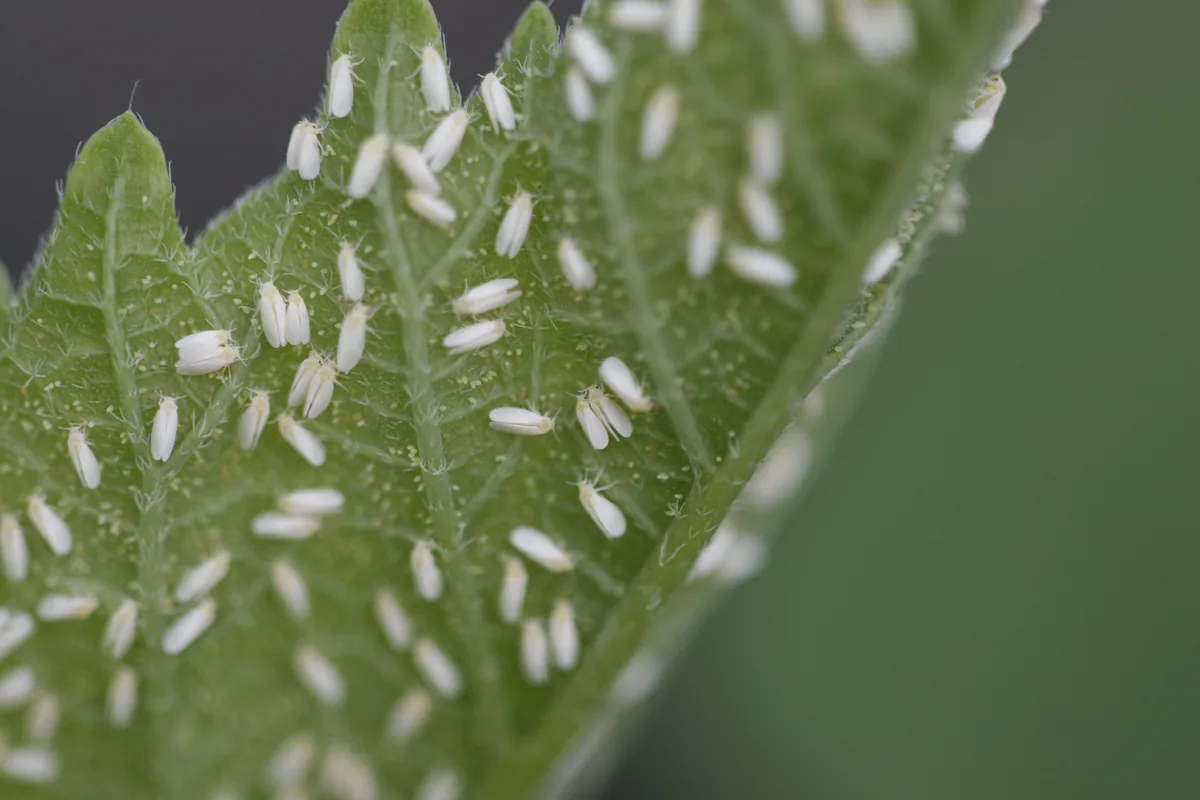
Field Identification
If new growth is curling, yellowing, sticky, or chewed, whiteflies may already be on the plant. This pest often builds quietly, then damage appears all at once. Feeding stress weakens growth, reduces yield, and opens the door to secondary disease. Early cleanup is much easier than fighting a full population surge later.
Inspect the newest growth first: leaf undersides, flower buds, stem joints, and tender tips where pests gather. Look for body shape, color, eggs, cast skins, honeydew, webbing, or fresh puncture marks. A hand lens and a white paper tap test help reveal small life stages. Matching visible pests with fresh plant damage confirms active infestation.
Not sure what you have? Use the symptom diagnosis tool →
How to Deal With It
Organic Control Methods
Encarsia formosa is a tiny parasitic wasp that specifically targets whitefly larvae and can be purchased from insectaries — one of the few commercially available beneficials that genuinely works when released correctly. Release in the evening near infested plants, at least 2 cards per 10 square feet, and avoid spraying anything for 2 weeks after release. For outdoor gardens, plant dill, fennel, and sweet alyssum nearby to attract natural populations of parasitic wasps and hoverflies. Lacewings and ladybugs eat adult whiteflies but work too slowly for an active surge.
Whiteflies explode on stressed, overfed plants — excess nitrogen produces the soft new growth they prefer. Yellow sticky traps are essential monitoring tools: hang them at plant height and check weekly. When you start catching more than a dozen per trap per week, act immediately — populations double every 2 weeks in warm weather. Keep plants well-watered and avoid drought stress. Reflective mulch confuses adult whiteflies and reduces landing rates significantly on low-growing crops.
Remove and bag heavily infested leaves immediately — whitefly nymphs on removed leaves will still emerge as adults if composted. Marigolds and nasturtiums at bed edges attract whitefly predators. Interplanting basil near tomatoes and peppers has shown real repellent effect on whiteflies specifically. Avoid planting new susceptible crops directly downwind of an infested bed during peak season — adult whiteflies drift on air currents and colonize new plants rapidly.
Yellow sticky traps catch adults and are the best monitoring tool you have — when traps fill fast, the population is about to surge. A strong water spray dislodges nymphs from leaf undersides but must be repeated every 2-3 days to be effective since eggs remain. For greenhouse plants, a handheld vacuum at dawn when adults are sluggish can remove large numbers quickly. Row covers over seedlings before whiteflies arrive prevent establishment entirely.
Insecticidal soap is the most effective contact spray — mix 1-2 teaspoons castile soap per quart of water and saturate leaf undersides where nymphs cluster. It must contact the pest to work and leaves no residual. Apply every 3 days for 2 weeks. Neem oil disrupts the whitefly lifecycle — mix 1 tablespoon neem plus 1 teaspoon castile soap per quart of warm water, apply weekly. Spray at dusk only — both products cause leaf burn in direct sun and harm beneficial insects on flowers. Rotate between soap and neem to prevent resistance buildup.
Let Nature Handle It
Natural Enemies
- Ladybugs
- Lacewings
- Parasitic Wasps
- Minute Pirate Bugs
Threat Map