About
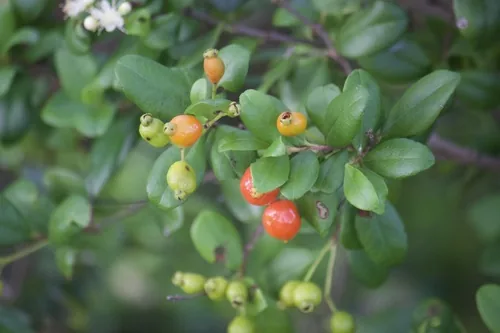
Simpson stopper (*Myrcianthes fragrans*) is a Florida-native evergreen shrub or small tree in the myrtle family. It usually stays in the 6–15 ft range, with glossy leaves, smooth tan bark, and fragrant white flowers followed by red to orange berries that birds love — and humans can nibble too (mild, resinous, not a supermarket fruit). It handles limestone, drought once established, and coastal exposure better than a lot of fussy exotics. In warm, humid food forests it shines as a backbone shrub: evergreen structure, pollinator buzz, and low drama if drainage is decent. Full sun to light shade; more sun = denser growth and heavier flowering/fruiting. Well-drained soil; tolerates dry spells after establishment. Avoid boggy spots. Seeds: clean fresh seed, sow in well-drained mix; germination can be slow and irregular — patience, PermieBro. Cuttings: semi-hardwood cuttings with humidity dome/rooting hormone in warm weather. Transplants: nursery liners or container plants; water regularly the first year. Pick berries when color shifts toward red-orange for fresh nibbling or jelly; leave plenty for birds if you are sharing the hedge.
Permaculture Functions
- Edible: Myrcianthes fragrans glossy red-orange berries taste mildly resin-mint straight off the shrub -- nice for shrub jelly when pectin carries the subtlety.
- Wildlife Attractor: Cream myrtle blossoms perfume evenings for small bees before dark berries fuel mockingbirds -- along limestone hedges.
- Ornamental: Compact glossy foliage and exfoliating cinnamon bark upgrade parking lot islands -- without thirsty exotics.
- Pollinator: Fragrant four-petaled blooms release citrus-sweet volatile plumes -- that hoverflies track from understory gloom.
- Border Plant: Stiff upright habit clips into formal maritime hedges -- between hammock shade and sunny vegetable panels.
Companion Planting
Threats & Pressure