About
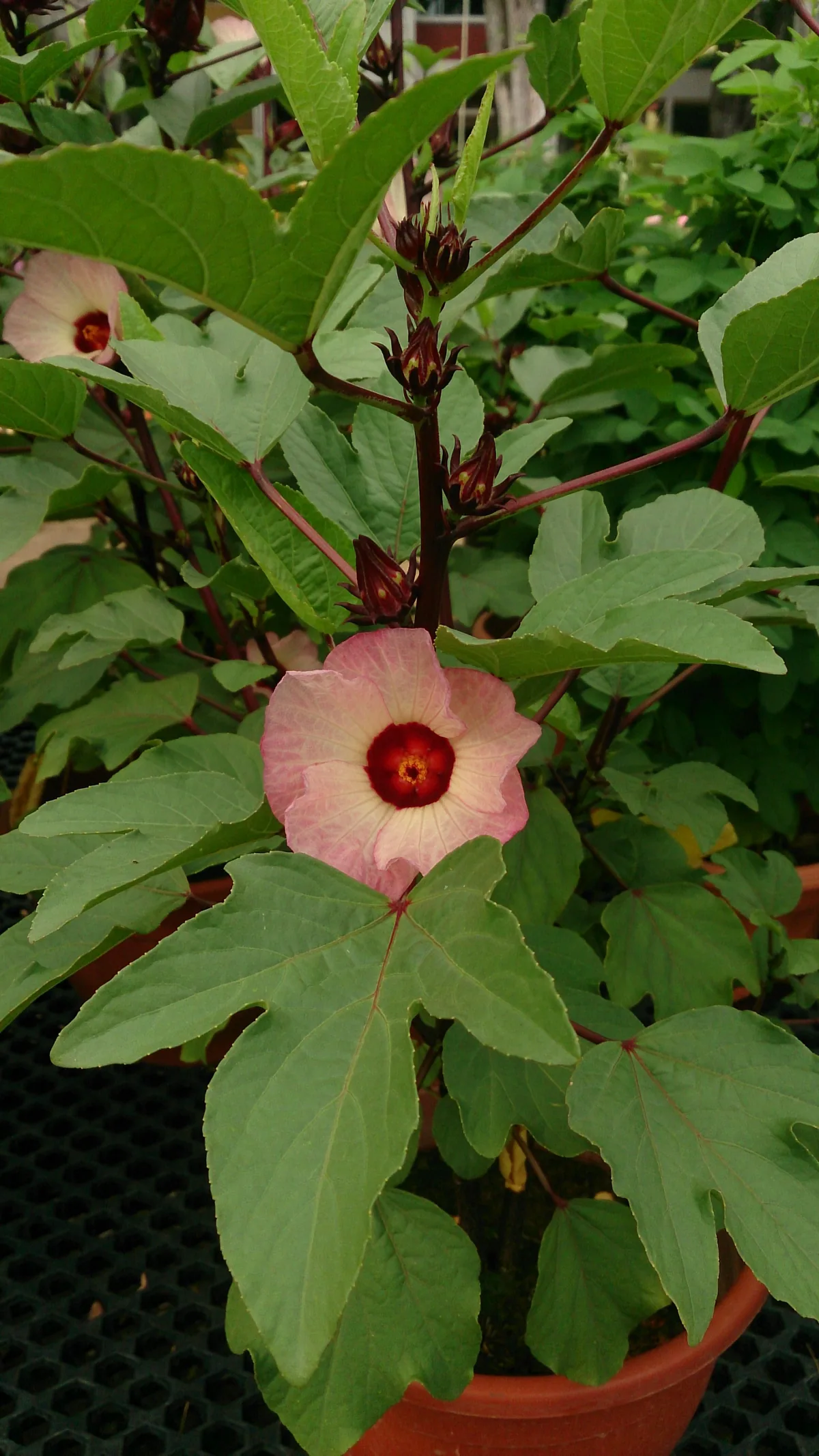
Roselle is hibiscus that files taxes as a vegetable: tart calyces for tea and jam, edible leaves if you are not boring, and a clock that screams annual once frost finds subtropical and tropical Americas. Plant after soil warms — cool roots make a sulk factory. Full sun for thick stems and heavy calyx production. Even moisture; drought shrinks calyx size and your winter pantry dreams. Well-drained fertile soil; responds to compost without corporate fertilizer poetry. Seeds: direct sow warm soil or start indoors 4–6 weeks before last frost. Cuttings: take semi-hardwood in warm months — roots with humidity, not hope alone. Roselle: pick peak flavor when fruits soften slightly and detach easily -- birds are a parallel calendar. Harvest after dew dries to reduce mold in baskets. Jam batches same day if humidity is high; acid and sugar balance matter more than Instagram gloss.
Permaculture Functions
- Edible: Fleshy red calyx cups swell after the yellow hibiscus bloom falls -- pick for Florida cranberry jelly, simple syrup, and acid teas; young leaves cook like mild okra if you strip them before stems toughen.
- Medicinal: Hibiscus-family acids and anthocyanins in calyx tea are traditional for blood pressure support -- can lower readings measurably; check meds, pregnancy, and first-cup orthostatic dizziness on hot afternoons.
- Wildlife Attractor: Open hibiscus faces feed bees all summer -- finches pick mature seed from dry capsules if you leave a few heads uncut past frost for winter interest.
- Pollinator: Large anthers dust carpenter bees and sweat bees -- serves pollinators that cannot reach deep mint tubes nearby on the same guild list.
- Mulcher: Frost-killed woody stems chip into paths or compost -- calyx harvest residue after processing still carries enough acid to activate a hot compost pile when layered thin.
- Border Plant: Red-stemmed annual rows read as a seasonal hedge along south fences -- where you want height without permanent shade from woody shrubs.
Field Observations
- No field observations yet
Companion Planting
- Planting too early in cool wet soil
- Expecting perennial life where hard frost exists
Threats & Pressure