About
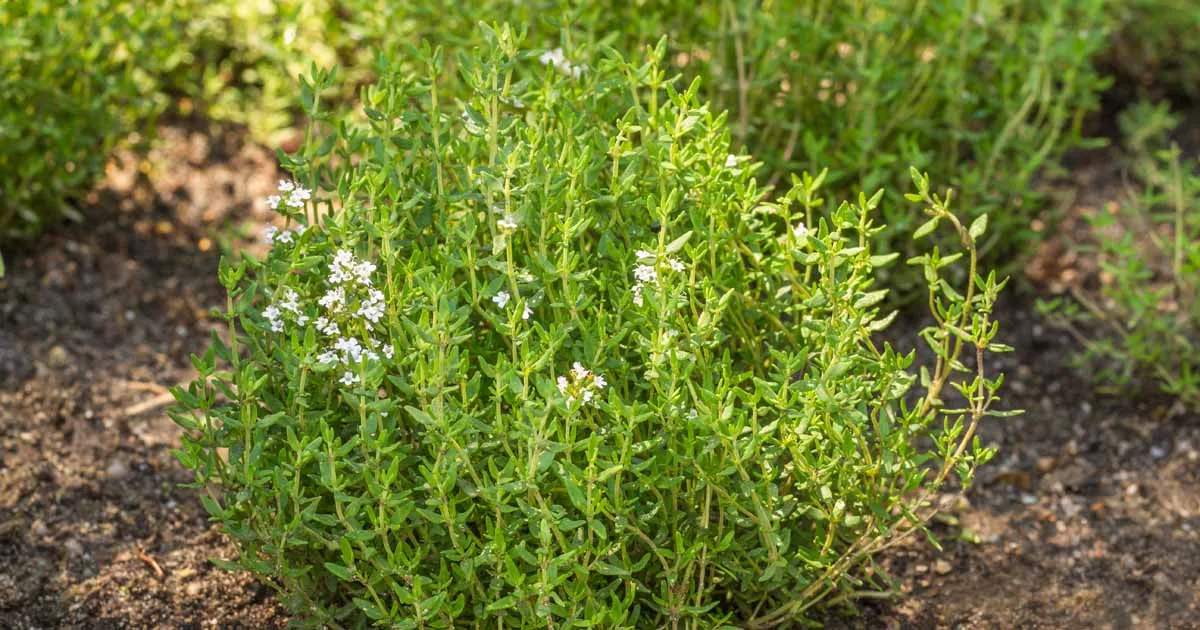
Thyme is a low-growing, aromatic perennial herb with woody stems and small, fragrant leaves. It thrives in well-drained soil and full sun, making it an excellent choice for borders, rock gardens, and companion planting. The plant produces small purple or pink flowers that attract pollinators such as bees and butterflies. This hardy herb is drought-tolerant and adapts well to poor soils, making it a low-maintenance addition to gardens. Thyme has antimicrobial properties and is commonly used in culinary dishes, herbal teas, and natural medicine. Prefers full sun (6-8 hours of direct sunlight daily). Thrives in dry, well-drained sandy or loamy soil. Drought-tolerant; requires minimal watering once established. Seeds: Sow indoors in early spring or direct sow after the last frost. Cuttings: Take softwood cuttings in spring and root in moist soil. Division: Separate mature plants in early spring or fall. Harvest leaves throughout the growing season. Best flavor is achieved just before flowering. Cut stems and dry them for long-term storage.
Permaculture Functions
- Edible: Thymus vulgaris narrow leaves harvested before noon carry peak thymol oil -- for roast vegetables and syrups tied to Provençal drying racks.
- Medicinal: Thymol shows documented antimicrobial activity in lab assays -- translate lab mic values to human doses with clinicians before marketing cure stories.
- Pollinator: Pink-lipped flowers hug stems in early summer for short-tongued bees walking thyme carpets -- between pavers.
- Wildlife Attractor: Nectar sustains parasitic wasps hunting caterpillars -- along herb spirals dense enough to read green from orbit.
- Mulcher: Sheared clippings dry into thyme-smelling mulch that suppresses slug traffic -- on strawberry hills.
- Dynamic Accumulator: Fibrous roots mine calcium into sun-stressed foliage -- sweep trimmings into compost ahead of brassica beds.
- Border Plant: Woody mats edge stone paths -- survives where mower strips would scalp shallow crowns of other herbs.
- Pest Management: Volatile plumes confuse cabbage moths scouting brassica rows -- when thyme bands stay wide enough to release scent plumes.
Companion Planting
Also mentioned as companions:
- Rose
Not yet profiled in PermiePortal
- Onions
Threats & Pressure