About
Perennial basil here means the clove-scented shrubby Ocimum that survives where sweet basil goes to compost — woody base, strong aroma, bee traffic. subtropical and tropical Americas: often root-hardy in 9b with mulch; top freezes, crown sometimes laughs and resprouts. Not the same as sterile 'African Blue' pots on Pinterest. Full sun for dense oils; part shade tolerable but stretches stems. Well-drained fertile soil; drought-tolerant once established but basil-class flavor needs moisture. Avoid boggy winter pots — roots rot when cold meets sogginess. Cuttings: root softwood to semi-hardwood in warm months under humidity. Seeds: start warm; variability in scent intensity — cull boring seedlings. Division: split older crowns in spring when actively pushing. Perennial Basil: pick peak flavor when fruits soften slightly and detach easily -- birds are a parallel calendar. Harvest after dew dries to reduce mold in baskets. Jam batches same day if humidity is high; acid and sugar balance matter more than Instagram gloss.
Permaculture Functions
- Edible: Ocimum gratissimum leaves carry clove-eugenol punch suited to long-simmered stews, spiced teas, and pestos that would bully sweet basil -- blanch before freezing to lock color because woody stems hate delicate Genovese timing.
- Medicinal: African basil oils show antimicrobial literature in lab assays at concentrations kitchens never hit -- treat culinary use as flavor medicine, not pharmacy substitution, especially around anticoagulant-sensitive households.
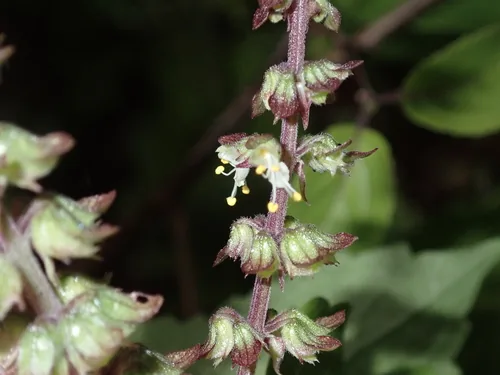
- Wildlife Attractor: Tall lavender flower spikes feed honeybees and carpenter bees when you delay shearing -- let one hedge row bolt while you keep kitchen rows pinched for leaf oils.
Companion Planting
- Hard freeze on unmulched container plants
- Confusing with true annual basils for timing and pruning
Threats & Pressure