About
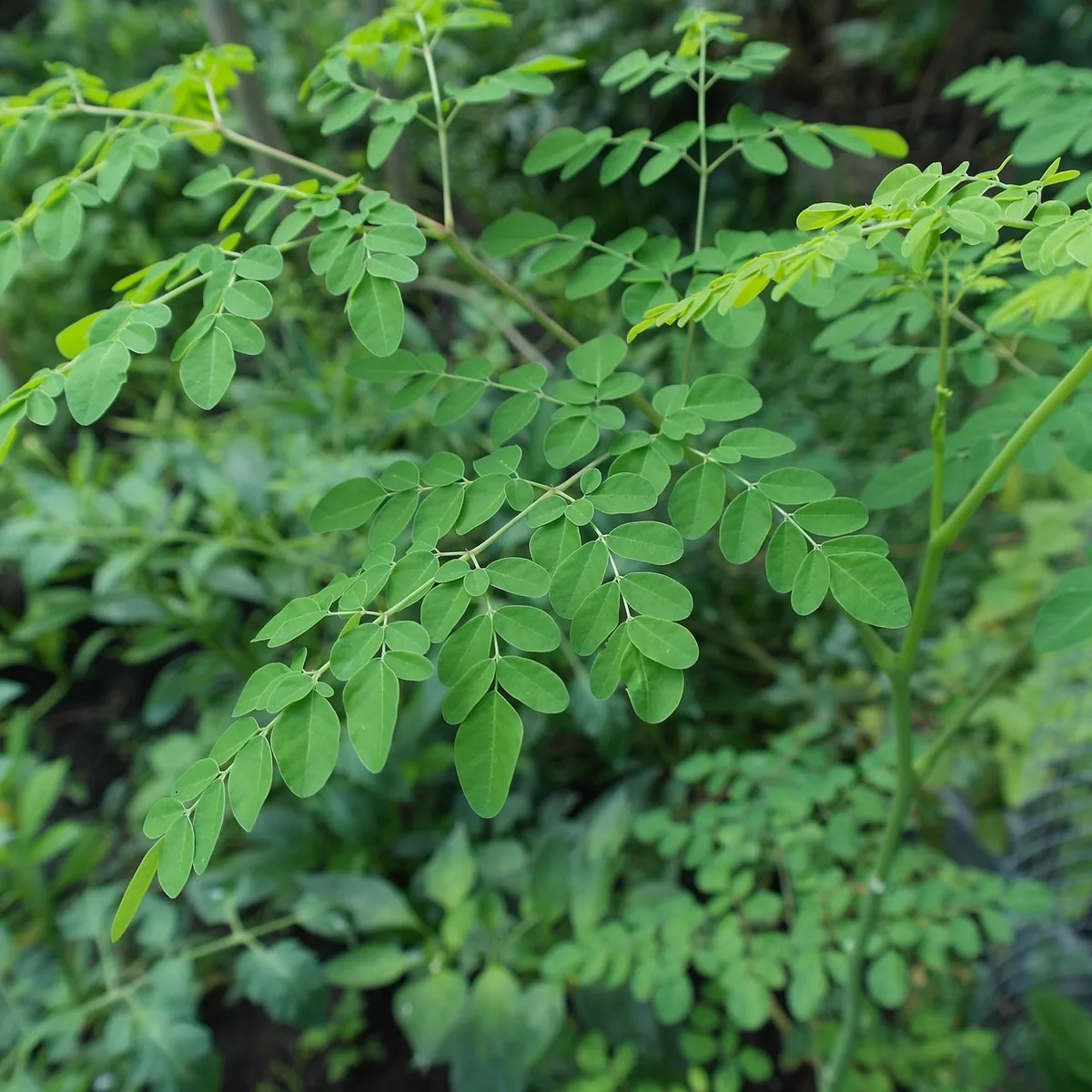
Moringa (Moringa oleifera) is a fast-growing, drought-resistant tree that can reach up to 12 meters (40 feet) in height. It has feathery, fern-like leaves that are highly nutritious and used as a food source. The tree produces long, drumstick-shaped pods that contain seeds, which can be eaten or used for oil extraction. Moringa thrives in warm, tropical and subtropical climates and is known for its resilience and ability to grow in poor soil conditions. It is widely cultivated for its leaves, pods, and seeds, all of which have culinary, medicinal, and agricultural benefits. Prefers full sun (6+ hours per day). Requires well-draining soil and is drought-tolerant once established. Benefits from moderate watering but does not tolerate waterlogged conditions. Seeds: Direct sow seeds in warm soil, germinates in 1-2 weeks. Cuttings: Can be propagated from branch cuttings placed directly in soil. Transplanting: Young seedlings can be transplanted but must be handled carefully. Leaves can be harvested once the tree reaches 1.5 meters (5 feet) in height. Pods should be picked when young and tender (about 30-45 cm or 12-18 inches long). Seeds can be collected once pods are fully mature and dried.
Permaculture Functions
- Edible: Leaves, immature pods, flowers, and seeds are all edible -- leaves harvest within 60 days of planting and regrow aggressively after hard pruning, making this one of the most productive cut-and-come-again canopy plants in a subtropical food forest.
- Medicinal: Every part carries documented nutritional density -- leaves contain more protein per gram than eggs, more calcium than milk, more iron than spinach. Traditional and clinical use centers on anti-inflammatory, immune-supporting, and blood sugar modulating properties. Research first, dose carefully.
- Mulcher: A mature Moringa pruned hard every 6-8 weeks produces 10-15 lbs of leaf mulch per cutting -- biomass breaks down fast in heat, releasing nutrients within weeks rather than months. Design your pruning schedule around your heaviest feeding crops.
- Animal Fodder: Leaves and pods are high-protein feed accepted by chickens, goats, cattle, and rabbits -- protein content rivals commercial feed supplements at zero input cost once established.
- Windbreaker: Fast growth to 15-20ft provides a functional windbreak within one season -- used as a living fence or border planting it protects lower-layer crops from desiccating winds while dropping fertility onto the root zone below.
- Erosion Control: Deep taproot and aggressive lateral roots stabilize degraded, compacted, or sandy soils where most trees fail to establish -- one of the few canopy plants that actively improves soil structure rather than just occupying it.
- Water Purification: Crushed seed powder acts as a natural coagulant -- cationic proteins bind to suspended particles and bacteria, reducing water turbidity by up to 89% and bacterial counts by up to 98% in documented trials. Useful as a pre-treatment step before boiling in off-grid or emergency water systems. Not a complete purification method on its own.
- Plant Growth Stimulant: Fresh leaf extract diluted as a foliar spray acts as a natural biostimulant -- cytokinins in young leaves accelerate germination, root development, and early growth in companion crops. Apply as a diluted leaf juice spray at transplant or seedling stage for measurable yield improvement at zero cost.
- Pollinator: Fragrant white to cream flowers produced in large panicles feed bees and beneficial insects -- flowering is prolific and extended in warm climates, providing consistent nectar access when many other canopy trees are not in bloom.
- Shade Provider: Dense canopy at 15-20ft creates meaningful understory microclimate -- useful for establishing shade-tolerant crops like ginger, turmeric, and taro beneath. Strategic placement filters afternoon sun in high-heat climates, reducing moisture loss in the beds below.
Field Observations
- No field observations yet
Companion Planting
Also mentioned as companions:
- Legume Tree
Not yet profiled in PermiePortal
Threats & Pressure