About
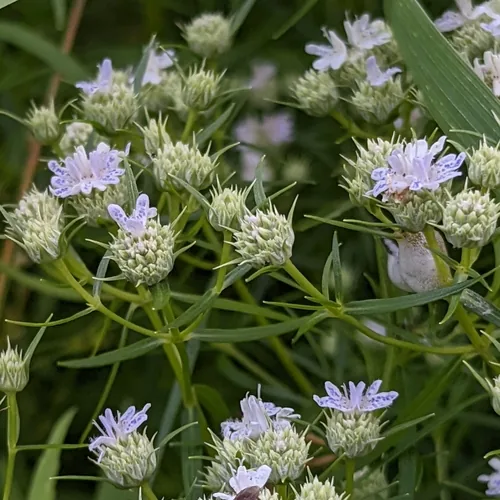
Narrowleaf mountain mint (Pycnanthemum tenuifolium) is a fine-textured eastern North American perennial whose needle-like leaves and flat white flower platforms read almost like a miniature yarrow until you crush the stems and get the mint slap. It tolerates heat and leaner soil than many mints, making it a backbone plant for insectary rows and rain-garden berms. Full sun to light shade; more sun tightens growth and increases bloom density. Moderate moisture; tolerates short dry spells after establishment but wilts in extreme drought without mulch. Adaptable soil; prefers average fertility and good drainage, not stagnant muck. Division in spring or fall; replant vigorous sections with buds. Soft tip cuttings in late spring under humidity. Seed: cold stratify; variable germination—division is faster. Snip flowering tops in peak bloom for tea; dry in shade with airflow. Stagger harvests so at least half the stand stays open for pollinators. Cut back frost-killed stems in late winter to tidy before spring emergence.
Permaculture Functions
- Edible: Needle-leaf Pycnanthemum tenuifolium tops steep into sharp, clean mint teas, simple syrups, and herb salts when snipped at peak white bloom -- finer foliage dries faster than P. muticum, so shade-dry bundles with airflow to lock volatiles in.
- Pollinator: Flat white composite-like heads hold shallow nectar for sweat bees, small carpenter bees, tachinid flies, and parasitoid wasps during late-summer dearth -- stagger cuts so half the clump keeps feeding insects into early fall.
- Pest Management: Monoterpene-rich leaf crush releases a scent barrier that masks brassica host cues when low bands edge vegetable rows -- scout anyway because heavy flea-beetle flights treat perfume as a suggestion, not a wall.
Companion Planting
Threats & Pressure