About
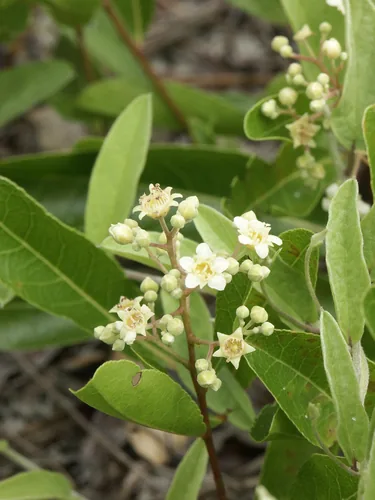
Coco plum (*Chrysobalanus icaco*) is a coastal workhorse: salt-tolerant, wind-sculpted, and willing to fruit white to dark purple drupes with mild, sometimes insipid, sometimes surprisingly pleasant pulp around a big seed. Forms range from low mounding shrubs to taller upright types depending on ecotype and genetics. In subtropical and tropical Americas it is a gamble without protection; treat serious freezes as a reset button unless you are on thermal mass near the coast. Full sun for best fruiting; tolerates light shade. Drought-tolerant once established but fruits better with regular deep watering in well-drained soil. Tolerates brackish wind and sandy coasts. Seeds: crack or scarify hard endocarp or patience-soak; germination is slow. Cuttings: hardwood cuttings possible with warmth and humidity. Transplants: common from nursery containers; stake if exposed to steady coastal wind. Coco Plum: pick peak flavor when fruits soften slightly and detach easily -- birds are a parallel calendar. Harvest after dew dries to reduce mold in baskets. Jam batches same day if humidity is high; acid and sugar balance matter more than Instagram gloss.
Permaculture Functions
- Edible: White to dark purple drupes yield mild fresh snacking pulp and jelly base once you accept a large seed and variable sugar -- between ecotypes.
- Erosion Control: Fibrous roots and low branching knit frontal dunes and coastal berms -- where salt spray kills less tolerant shrubs.
- Wildlife Attractor: Small flowers feed insects -- ripe fruit feeds songbirds and mammals that also prune awkward lower branches.
- Windbreaker: Multi-stem mounding to upright forms break horizontal salt wind -- before it hits patios, pools, and beach cottages.
Companion Planting
Also mentioned as companions:
- Beach Sunflower
Not yet profiled in PermiePortal
- Prolonged waterlogging in heavy clay
Threats & Pressure