About
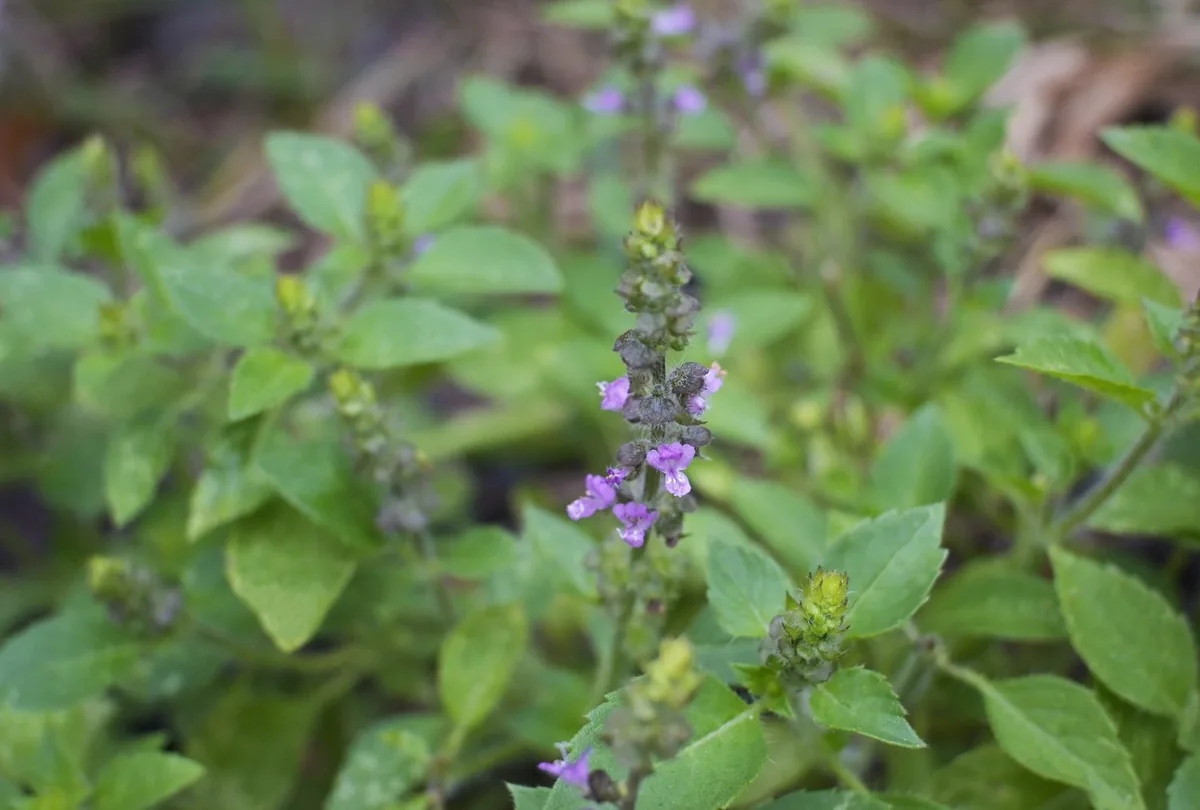
Holy Basil (Ocimum tenuiflorum) is a highly aromatic, bushy herb that grows between 30–90 cm (1–3 feet) tall. It produces small purple or white flowers that attract bees and other pollinators. The leaves have a strong, clove-like scent and are widely used in Ayurvedic medicine. Holy Basil is a heat-loving plant that thrives in warm, humid environments with well-drained, fertile soil. It is often grown as a medicinal herb, companion plant, or natural pest deterrent. Prefers full sun (at least 6–8 hours of direct sunlight daily). Requires well-drained, fertile soil with moderate water needs. Drought-tolerant once established but benefits from regular watering. Seeds: Direct sow after the last frost or start indoors 4–6 weeks before transplanting. Cuttings: Can be propagated from stem cuttings placed in water or soil. Self-seeding: Readily self-seeds in warm climates. Harvest leaves regularly throughout the growing season for fresh use. Flowers should be pinched off to encourage bushier growth. Entire plants can be harvested before flowering for drying and medicinal use.
Permaculture Functions
- Edible: Ocimum tenuiflorum leaves carry clove-eugenol aroma for Thai soups, pestos, and tulsi tea -- harvest soft tips before flowering for kitchen use, or dry whole flowering tops for winter chai if you allow bloom.
- Medicinal: Ayurvedic practice classifies tulsi as an adaptogen for stress and immune support -- use as food-grade tea first, and check pregnancy or blood-thinner contraindications before medicinal dosing.
- Pollinator: Small white to purple lipped flowers feed honeybees and small butterflies when pinched plants finally bolt -- leave a few flowering stems if seed saving matters more than bush form.
- Wildlife Attractor: Nectar supports generalist pollinators along bed edges where basils knit insect corridors between taller crops -- it is not a bird tree, but it keeps beneficial insect traffic moving.
- Dynamic Accumulator: Fast leaf turnover pulls calcium and magnesium into tissue that you recycle by chop-and-drop around heavy feeders -- pair with compost tea if soils test low on cations.
- Border Plant: Bushy, aromatic rows edge paths and vegetable beds -- strong scent marks the line between foot traffic and planting zones without plastic edging.
- Pest Management: Volatile eugenol and methyl chavicol from bruised leaves confuse soft-bodied insects in dense aromatic bands -- it is one row in an insectary strategy, not a substitute for scouting tomatoes.
Companion Planting
Also mentioned as companions:
- Pepper
- Tomato
- Eggplant
- Marigold
Not yet profiled in PermiePortal
- Fennel
- Rue
Threats & Pressure