About
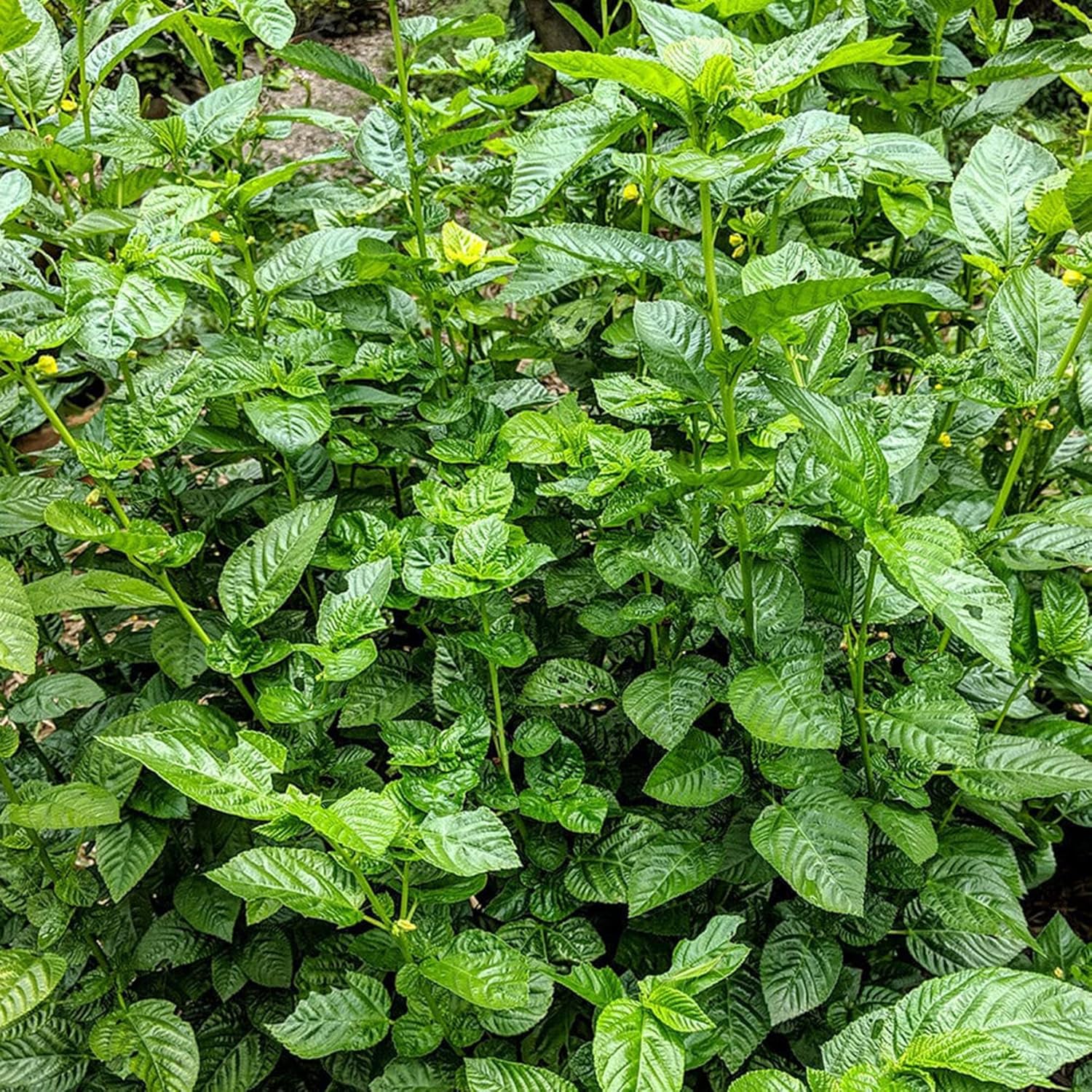
Egyptian Spinach is a fast-growing leafy green widely cultivated in tropical and subtropical regions. It can grow up to 2 meters (6 feet) tall and has bright green, narrow, lance-shaped leaves that are rich in nutrients. It thrives in hot climates and requires warm temperatures to germinate and grow properly. The leaves are used in traditional dishes, particularly in soups and stews, due to their mucilaginous texture when cooked. This plant is well-suited for agroforestry and permaculture settings due to its adaptability, high productivity, and ability to improve soil fertility. 🌞💧 **Sun and Water Requirements:** - **Sun:** Prefers full sun exposure for optimal growth but tolerates partial shade. - **Water:** Requires regular watering, especially during dry periods. Prefers well-drained, loamy soil but can tolerate a range of conditions. ✂️🫘 **Methods to Propagate:** - **Seed:** Sow seeds directly in warm soil after the last frost or start indoors 6 weeks before transplanting. Seeds should be soaked for 24 hours before planting to improve germination. - **Cuttings:** Can be propagated via stem cuttings, though seed propagation is more common. 🧑🌾👩🌾 **When to Harvest:** - **Leaves:** Can be harvested as early as 4-6 weeks after planting. Frequent cutting encourages bushier growth. - **Seeds:** Collected at the end of the growing season when pods turn brown and dry.
Permaculture Functions
- **Edible: ** Highly nutritious, with leaves used in soups, stews, and stir-fries. Rich in vitamins A, C, and E, iron, and fiber.
- **Medicinal: ** Traditionally used as a digestive aid, anti-inflammatory, and immune booster.
- **Ground Cover: ** Grows densely and can be used to cover soil and suppress weeds.
- **Dynamic Accumulator: ** Enriches soil with organic matter and improves soil fertility.
Practitioner Notes
- Morning picks hold turgor; afternoon heat steals shelf life even if the cooler feels honest.
- Dry aerial parts fast with airflow, not slow plastic bags—mold reads as ‘aged’ only in marketing copy.
- Shear ragged mats after heat waves; two weeks of ugly beats six months of thatch rot.
- Notebook one weird year—weather anomalies repeat; memory lies, scribbles do not.
Companion Planting
- Okra
- Amaranth
- Eggplant
- None reported
Pest Pressure