About
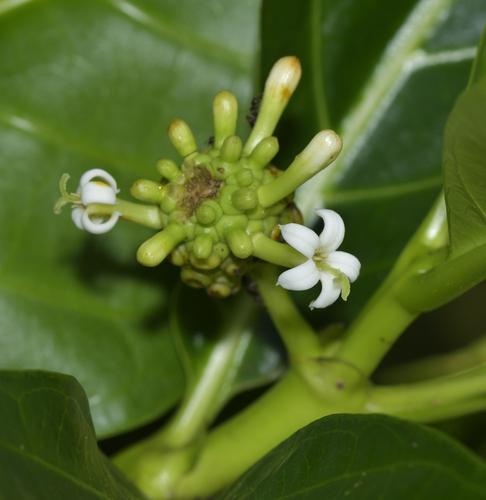
Noni fruit is the market name for Morinda citrifolia, a tropical Rubiaceous tree or large shrub bearing compound-appearing opposite leaves and distinctive bumpy syncarps that ripen to soft, translucent yellow-white with a bold aroma. Typical garden specimens reach 10–18 feet (3–5.5 m) and fruit repeatedly where nights stay warm and days bring heat. The plant belongs in permaculture conversations about resilient biomass, pollinator support, and culturally specific food-medicine—not in the same sentence as mild table grapes. ☀️💧 Sun and Water Requirements: Full sun drives heaviest flowering and fruit set; partial shade works for young plants during establishment. Deep watering through dry seasons increases fruit size; good drainage prevents root decline in prolonged wet weather. Mulch to keep surface roots cool; avoid stagnant water over the root crown. ✂️ Propagation: Start from fresh seed or vegetative clones of known performers. Air-layer high-yielding limbs to avoid seedling roulette. Head back overly dense centers after harvest flushes to improve light penetration and reduce fungal lodging. 🌾 Harvest / Best Use Timing: Pick when fruit softens and skin thins—texture beats color alone. Process quickly into juice, ferments, or dried products per vetted recipes. Leaf harvest can continue year-round in tropical climates; stagger picks to avoid stripping single branches bare.
Permaculture Functions
- Edible: Ripe fruit and controlled ferments anchor Pacific and Asian traditions where flavor education comes with the territory.
- Medicinal: Leaf and fruit preparations appear in herbal systems—respect contraindications and local regulatory reality.
- Wildlife Attractor: Night visitors including bats and moths interact with flowers and fruit; design access accordingly.
- Dynamic Accumulator: Fast leaf turnover and deep roots pull minerals into biomass that returns as mulch or compost feedstock.
Practitioner Notes
- This entry is Morinda citrifolia—the database also holds a parallel “Morinda citrifolia” record for Latin-first searchers.
- Clone mother trees with fruit chemistry you can defend at market; seedlings gift unpredictable funk levels.
- Whitefly honeydew prints sooty mold receipts on leaves—blast with water, then recruit predators.
- Cool wet spells without heat stall ripening—patience or a greenhouse ego, pick one.
Companion Planting
- Banana — broad-leaf shade and potassium-heavy mulch cycle complement noni’s litter without identical pest timing
- Ginger — shade-tolerant understory rhizome along the eastern drip edge where morning sun is gentler
- Papaya — fast fruiting partner using vertical space while noni canopy slowly expands
- Duplicate taxon also listed as “Morinda citrifolia” common name entry—same species, different label for searchers
- Strong aroma near patios—site downwind of outdoor dining delusions
Pest Pressure