About
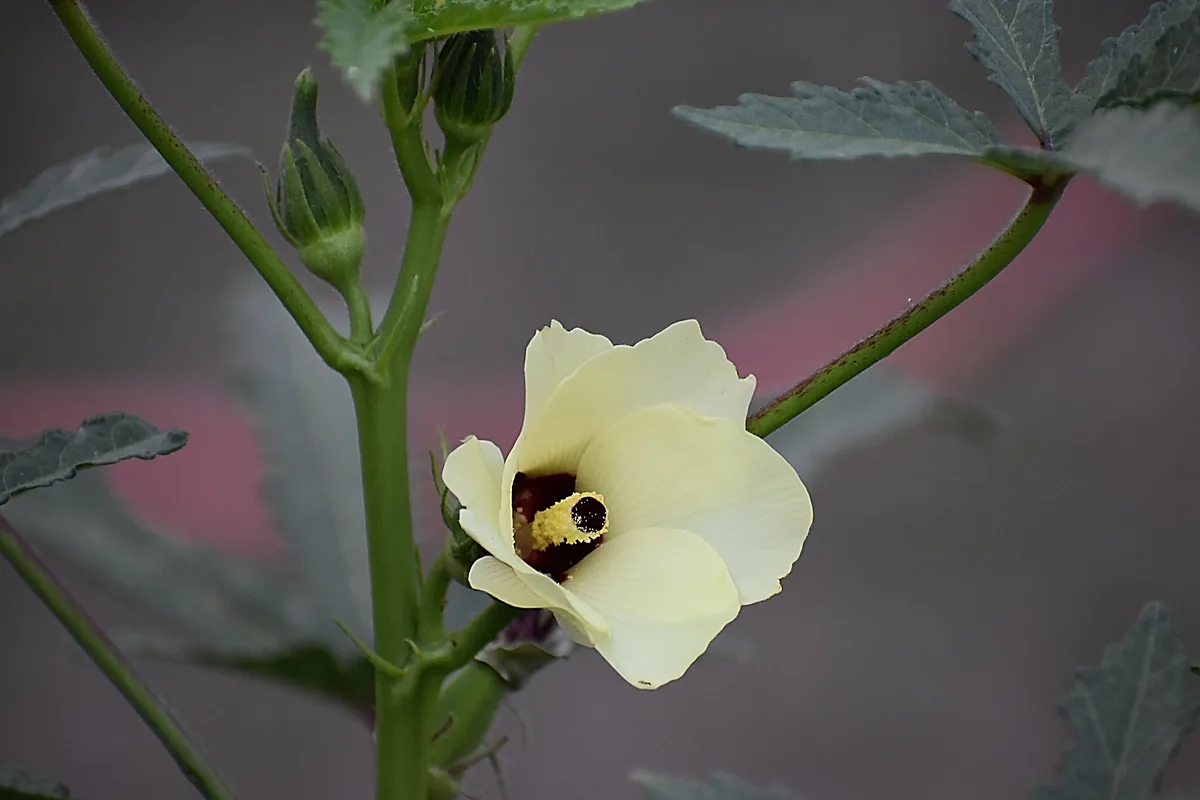
Edible hibiscus here means **Abelmoschus manihot**, a tall malvaceous shrub with huge maple-ish leaves and showy pale yellow flowers. Young leaves and shoot tips are cooked like mild greens; mucilage behaves okra-adjacent in stews. Dies back in hard freezes, returns from crown or mulch if mild; treat as annual in cooler margins or overwinter cuttings. Full sun to light shade; rich, moist, well-drained soil; heavy feeding during rapid summer growth; mulch to keep roots cool. Seeds; basal cuttings; division of multi-stem clumps. Save seed from the most tender-leafed plants you like. Cut young leaves and shoot tips continuously for greens through rapid summer growth.
Permaculture Functions
- Edible: Young Abelmoschus manihot leaves and shoot tips cook like mild malvaceous greens with okra-class mucilage for gumbo bodies -- cut tips weekly through humid summer flushes; this is not Hibiscus sabdariffa roselle calyx harvest.
- Ornamental: Dinner-plate palmate leaves and pale yellow musk-mallow flowers carry a tall shrub silhouette through zone 8-12 heat -- without pretending to be temperate foundation shrubbery.
- Mulcher: Soft herbaceous wood responds to hard seasonal chop by returning armloads of fast-decaying leaf biomass -- for subtropical chop-and-drop under fruiting bananas.
- Wildlife Attractor: Wide-open corollas with nectar guides keep generalist bees and syrphids busy -- while daytime heat would shut down many tight double ornamental blooms.
Companion Planting
Good Neighbors
Cautions
- Boggy stagnant soil
Threats & Pressure
🦎 Animal Pressure