About
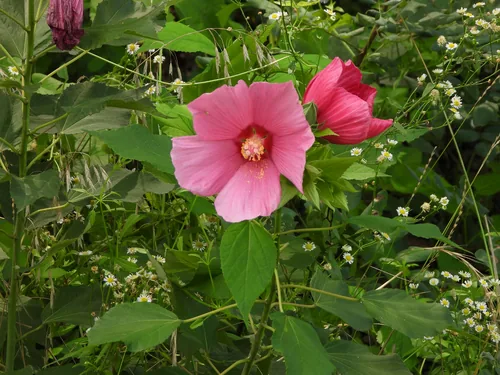
Marsh hibiscus is a robust herbaceous to shrubby mallow of eastern North American wetlands, pushing up stems 4–7 feet tall with huge maple-like leaves and summer flowers that range white to pink with a deep red eye. It thrives in sunny edges of swales, pond margins, and rain gardens where soil alternates between wet and moist. In subtropical and tropical Americas it fits naturalistic water features, bioswales, and detention basins—humid summers are on-brand; dry season drawdown should not bake roots forever without mulch or residual moisture. Use it where mosquitoes are managed by ecology (fish, predators) rather than denial. Full sun for maximum bloom; light shade only where heat and glare are extreme. Rich, organic, moisture-retentive soil; tolerates brief inundation; not a desert plant. Consistent moisture during bloom; mulch with leaf litter to buffer evaporation in sandy sites. Seeds after last chill risk; nick or soak seeds to improve germination. Divide crowns in early spring before heavy growth; keep divisions wet. Softwood cuttings in summer under mist root quickly for clone expansion. For landscape, deadhead if you dislike self-sowing; leave seed heads if you want finch food and winter structure. Cut back frost-killed stems after they bronze in cooler zones; in frost-free areas prune for shape after main flush.
Permaculture Functions
- Ornamental: Hibiscus moscheutos throws white-to-pink saucer blooms with a crimson eye along pond margins -- huge leaves read tropical even in temperate rain gardens.
- Pollinator: Open, nectar-rich flowers feed ruby-throated hummingbirds and large carpenter bees in mid-summer -- site in masses so pollinators find volume, not single stems lost in turf.
- Wildlife Attractor: Finches work dry capsules in fall while stems harbor beneficial spiders -- leave dead stalks until spring if winter structure matters for birds.
- Water Retention: Deep roots and lush summer canopy slow sheet flow across bioswales -- standing water cools faster when broad leaves shade shallow pools during heat waves.
Companion Planting
Threats & Pressure