About
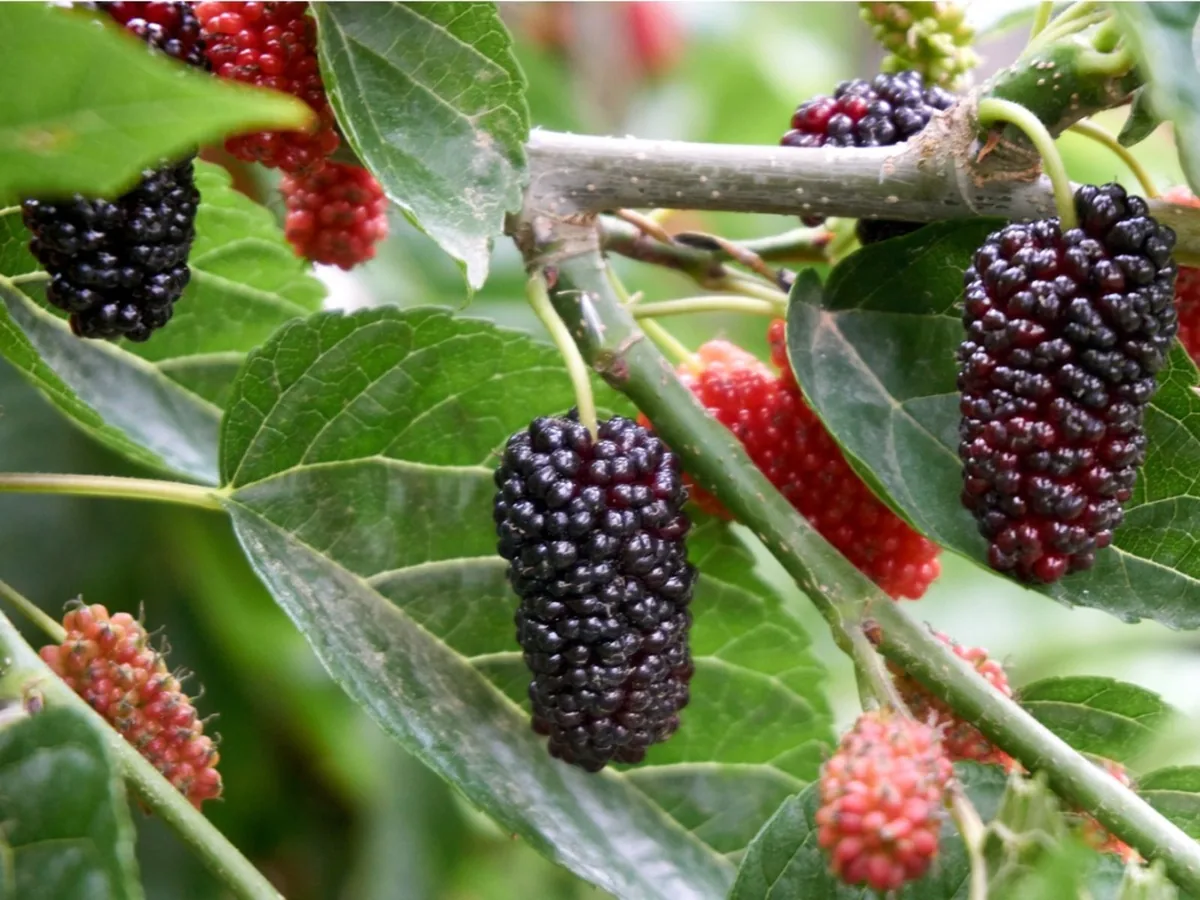
Mulberry trees (Morus spp.) are fast-growing deciduous trees known for their sweet, nutritious berries and their ability to thrive in various climates. They produce an abundance of fruit, which is enjoyed fresh, dried, or made into jams and wines. The trees have deep roots, making them resilient to drought conditions and suitable for erosion control. The leaves of some species, particularly Morus alba, are a primary food source for silkworms. Mulberries attract pollinators and wildlife, making them an excellent addition to food forests and permaculture designs. Prefers full sun but tolerates partial shade. Requires moderate to low watering; drought-tolerant once established. Adaptable to different soil types but thrives in well-draining, loamy soil. Seeds: Requires cold stratification before planting. Cuttings: Can be propagated using softwood or hardwood cuttings. Grafting: Often grafted onto rootstock for improved growth. Berries ripen in late spring to early summer. Fruit is ready when it turns deep red, purple, or black, depending on the variety. Harvest by gently shaking the branches; ripe berries fall easily.
Permaculture Functions
- Edible: Black, red, or white types stain fingers for weeks -- eat out of hand, dry like raisins, or cook down to syrup; Morus alba leaves are the historic silkworm feed and a boiled green in some Asian kitchens.
- Medicinal: Root-bark tea shows up in old texts for blood sugar support -- modern evidence is thin; do not confuse bark harvest with girdling young trees you still want fruit from.
- Wildlife Attractor: June berry drop feeds catbirds, orioles, and raccoons -- accept partial loss or spread harvest netting only on choice limbs, not the whole crown.
- Mulcher: Soft leaves compost hot when mowed with spring grass clippings -- twiggy prunings chip into paths instead of burning piles on no-burn days.
- Dynamic Accumulator: Leaf litter runs high in calcium on many sites -- what mulberries deposit under their own canopy is what poultry scratch-flocks recycle next season.
- Erosion Control: Deep taproot punches through compacted subsoil on old field edges -- where shallow-rooted shrubs failed after one drought year.
- Animal Fodder: Fresh leaves test near 20% crude protein for goats -- fruit drops finish fattening hogs in southern homestead orchards where acorns are absent.
- Windbreaker: Fast juvenile growth gives a permeable first wall north of tender citrus -- before slower evergreen oaks finish the job.
- Border Plant: Pollarded lines mark lane edges along chicken runs -- where you want summer shade, winter sun, and weekly berry pickup without climbing gear.
Companion Planting
Also mentioned as companions:
- Clover
- Raspberry
Not yet profiled in PermiePortal
- Walnut
Threats & Pressure