About
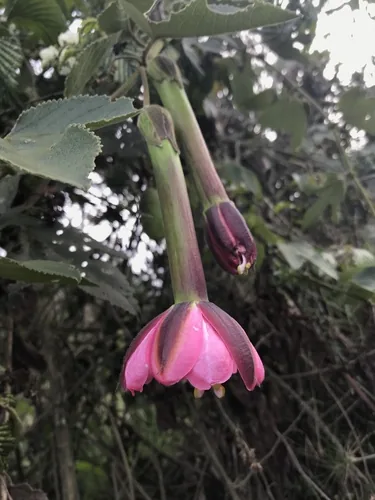
Banana passionfruit is a high-vigor passionflower vine with soft, lobed leaves and pink to rose flowers followed by elongated, yellow, aromatic fruit with tart, seedy pulp. Taxonomy is a moving target—**P. tarminiana** and related **P. tripartita** types show up under similar common names. Fruit quality varies; some selections are genuinely delicious, others are feral cat energy in fruit form. Invasion alert: this group has wreaked havoc in Hawaii and parts of the Pacific. On the mainland, treat it like a supervised exotic: prune hard, harvest every fruit, do not let it run into wild hammocks or parks. Full sun to light afternoon shade in brutal heat. Rich, well-drained soil with steady moisture during growth; reduce water somewhat in cool winter if leaves yellow. Wind protection helps tender new growth. Seeds (variable offspring); semi-hardwood cuttings; layering. Named types are best kept from cuttings for predictable fruit. Pick elongated fruit when color and aroma say ripe; eat, process, or destroy every fruit before drop where seed spread is a liability.
Permaculture Functions
- Edible: Passiflora tarminiana elongated yellow fruit gives seedy tart pulp for juice and ice cream bases when selections are sweet -- every ripe fruit left on the vine becomes seed cargo in Pacific climates where the group is already invasive.
- Ornamental: Pink to rose fringed flowers and glossy lobed leaves cover sturdy arbors in frost-free yards -- plan steel cable, not pine lattice, because stem girth exceeds tomato trellis math fast.
- Wildlife Attractor: Nectar-rich corollas feed carpenter bees and Gulf fritillary larvae eat foliage in cycles -- strict fruit pickup or bagging is the price of keeping frugivores from broadcasting seeds into hammocks.
- Shade Provider: Summer vine canopy on a pergola throws moving shade over chaya and papaya starts -- winter dieback in cool snaps clears light unless you protect roots on marginal zones.
Companion Planting
- Unmanaged wild edges
- Fragile shrubs